Business
5 reasons why your business needs a tech refresh in 2026

Published
2 months agoon

If your team spends more time battling slow software than serving customers, or if critical data is trapped in spreadsheets that only one person understands, you’re not just dealing with minor annoyances. You’re facing the hidden costs of outdated technology, a problem that silently drains resources, frustrates employees and holds your business back. A strategic tech refresh isn’t just about getting the latest gadgets; it’s about streamlining operations to build a more resilient, efficient and competitive organisation.
Many business leaders delay technology updates, fearing high costs and disruption. Yet, the cost of inaction is often far greater. Clinging to inefficient systems creates bottlenecks, exposes you to security risks and makes it nearly impossible to adapt to changing market demands. It’s time to shift the perspective from viewing technology as a cost centre to seeing it as a powerful engine for growth.
Identifying Inefficient Systems
The first step towards a solution is recognising the problem. Inefficient systems often hide in plain sight, normalised as “the way we’ve always done things”. Do your employees rely on complex manual workarounds to connect disconnected software? Is your customer data spread across multiple, unsynchronised platforms, leading to inconsistent service? These are classic signs of technological debt.
Other red flags include:
- Frequent system crashes and downtime: Every minute your systems are down is a minute you can’t serve customers or complete essential tasks.
- Slow performance: When simple operations take an unreasonable amount of time, productivity plummets and employee frustration soars.
- Lack of mobile access: In a world where work happens everywhere, systems that tie your team to a desk are a significant liability.
- Security vulnerabilities: Older software often stops receiving security updates, leaving your business and customer data exposed to cyber threats.
These issues are not just isolated technical glitches; they are symptoms of a deeper problem. Addressing them effectively may require more than a simple patch or upgrade. Identifying outdated components gives you a clearer picture of where change is needed and helps you begin streamlining business operations for long-term success.
Cutting IT Spend Effectively
It may seem contradictory, but investing in new technology can be one of the most effective ways to reduce your long-term IT expenditure. Maintaining old, custom-built systems is often a significant financial drain. The costs go far beyond the initial purchase price and include several hidden expenses.
For instance, legacy software may require specialist developers who are difficult to find and expensive to hire. The hardware it runs on might be inefficient, consuming excess energy and taking up valuable physical space. Furthermore, the constant need for patches, fixes and emergency support for failing systems adds up quickly, creating an unpredictable and often bloated maintenance budget.
A tech refresh allows you to shift from a reactive spending model to a proactive one. Here’s how:
- Move to the cloud: Migrating services to the cloud can replace large capital expenditures on servers and infrastructure with predictable monthly operational costs.
- Adopt Software-as-a-Service (SaaS): Subscribing to SaaS solutions for functions like CRM or accounting means you no longer have to worry about maintenance, updates or security, as the provider handles it all.
- Reduce downtime costs: Modern, reliable systems minimise the risk of costly outages that halt operations and damage your reputation. They provide a clear return on investment through stability and reliability.
The Path to Digital Transformation
A technology refresh is not merely about swapping old for new; it’s a catalyst for genuine digital transformation. This process involves fundamentally rethinking how your organisation uses technology, people and processes to create value and deliver better customer experiences. Many smaller organisations face barriers to digital adoption, including uncertainty about which tools to choose and concerns about security or disruption. Outdated systems lock you into rigid, inefficient workflows that are difficult to change. Modern technology, on the other hand, provides the flexibility to adapt and innovate.
For many organisations, legacy system modernisation offers a practical way to improve existing technology while preserving valuable data, processes and business knowledge. Rather than replacing everything at once, businesses can update key systems in stages, integrate newer tools and build a stronger foundation for future growth.
Consider how a modern system can reshape your operations. Instead of siloed departments, you can create integrated workflows where data flows freely between sales, marketing and customer service. This gives everyone a unified view of the customer, enabling more personalised and effective interactions. You can streamline your work processes by automating manual data entry, approvals and reporting, freeing up your team to focus on strategic initiatives rather than administrative chores.
This transformation also extends to your business model. With a modern tech stack, you can explore new revenue streams, such as e-commerce channels or subscription services, that were previously impossible. You gain the ability to collect and analyse data, turning business intelligence into a competitive advantage that informs everything from product development to marketing campaigns.
Boosting Team Productivity
The technology your team uses every day has a direct and profound impact on their morale, engagement and overall productivity. Forcing skilled professionals to wrestle with slow, buggy and non-intuitive software is a recipe for frustration and burnout. It sends a message that their time is not valued and can be a significant factor in employee turnover.
Providing your team with modern, efficient tools does the opposite. It empowers them to work smarter, not harder.
- Automation: New platforms can automate repetitive tasks like generating reports, sending follow-up emails or processing invoices. This frees up countless hours, allowing employees to focus on creative problem-solving and high-value work.
- Collaboration: Cloud-based tools for project management, communication and document sharing enable seamless teamwork, regardless of where your employees are located. Real-time collaboration breaks down communication barriers and accelerates project timelines.
- Accessibility: Modern systems are typically accessible from any device, giving your team the flexibility to be productive whether they are in the office, at home or on the road.
Investing in your team’s tools is an investment in your team itself. When you remove technological friction, you unlock growth and create a more positive and productive work environment where people can do their best work.
Maintaining Competitive Edge
In today’s market, speed and agility are paramount. Your competitors are constantly looking for ways to operate more efficiently, respond to customers faster and bring new ideas to market quicker. If your business is hobbled by outdated technology, you are effectively competing with one hand tied behind your back. A strategic tech refresh is essential for staying level with, and ultimately surpassing, the competition.
Modern systems enable the agility needed to pivot quickly in response to market shifts. For example, if a new customer demand emerges, a flexible IT infrastructure allows you to develop and launch a new service or product feature swiftly. Scalability is another key advantage. As your business grows, cloud-based systems can scale with you effortlessly, whereas legacy systems often require costly and time-consuming overhauls to handle increased load.
Your technology also shapes your brand’s reputation. A business that relies on modern, seamless digital experiences is perceived as competent and trustworthy. Conversely, one with a clunky website, slow response times and frequent technical errors appears outdated and unreliable. By investing in a tech refresh, you are not just improving internal processes; you are signalling to the market that your business is modern, forward-thinking and built for the future.
A tech refresh is no longer an optional upgrade but a fundamental business necessity. The initial investment pays for itself through increased efficiency, lower long-term costs and a more motivated team. The first step is often the simplest: conduct an honest audit of your current systems and identify the single biggest source of technological friction in your organisation.
Digital content consultant with over 10 years of experience writing about business and startups.

You may like


Why more UK businesses are choosing to repurpose rather than rebuild


How much does it cost for a small business to exhibit at a London event?


HMRC launches operation targeting dodgy barbers and vape shops


Countdown is on for the first physical edition of Beauty Bulb Live London


WhatsApp upgrades group chats with new tools


How Smart Headcount Planning Keeps Teams Productive Without Burnout
Business
Why more UK businesses are choosing to repurpose rather than rebuild
Published
2 weeks agoon
August 27, 2026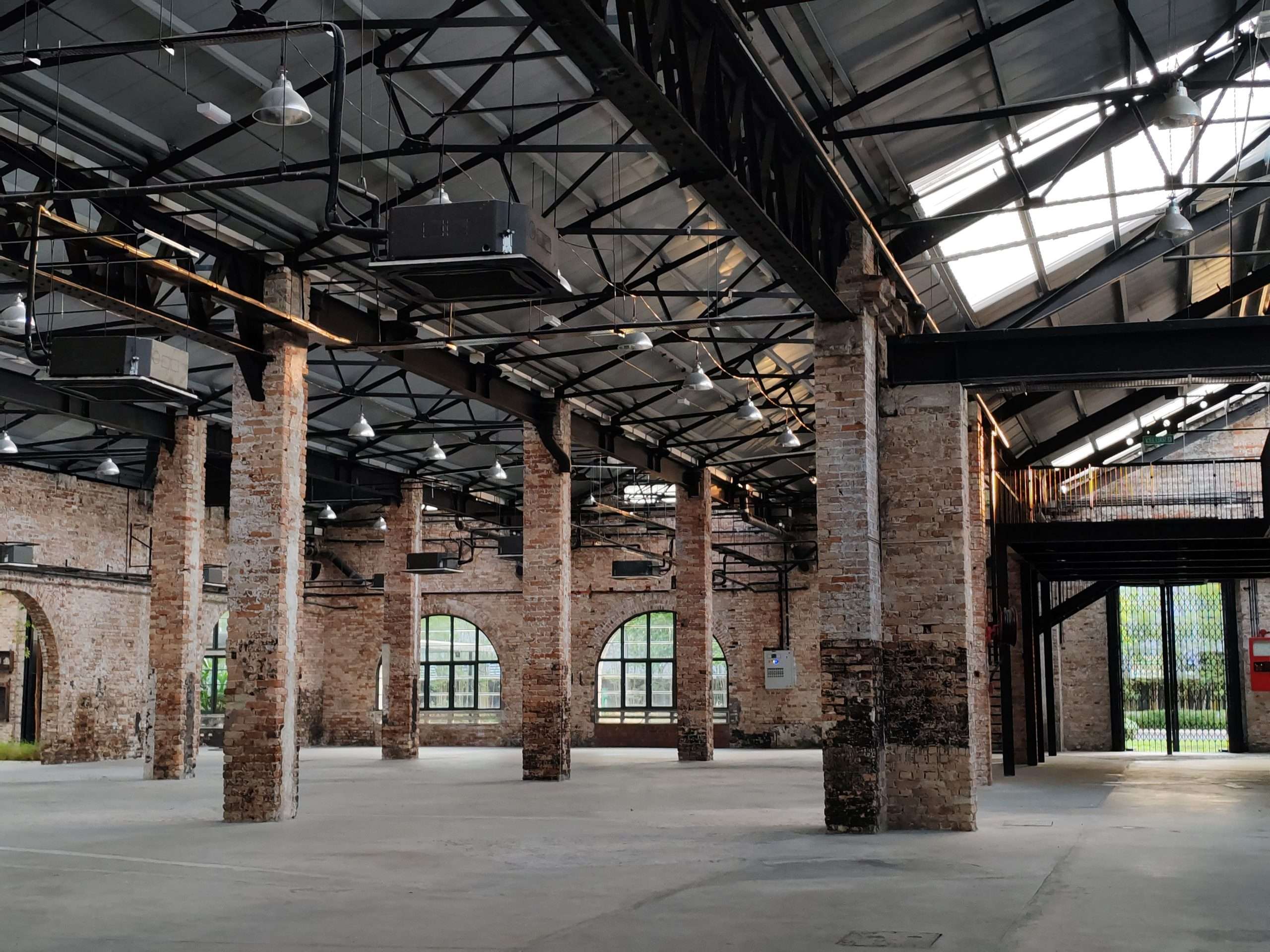
Rather than clearing a site and starting again, more UK businesses are choosing to work with what’s already there. Adaptive reuse, converting warehouses, former retail units, industrial buildings and dated offices into premises fit for modern use, is fast becoming a genuine growth strategy instead of a fallback option. As development costs rise, planning rules tighten, and sustainability expectations increase, the appeal of reworking existing structures has grown sharply. For many organisations, the ability to modernise a familiar building, reduce environmental impact, and avoid the disruption of relocation is becoming a practical and commercially attractive alternative to starting from scratch.
Why Adaptive Reuse Is Gaining Attention in the Commercial Sector
Interest in reuse has grown alongside a sharper understanding of the environmental cost of starting from scratch. Historic England’s research into embodied carbon found that refurbishing a typical building produces just a fraction of the emissions associated with demolishing it and constructing new, since so much of a building’s carbon footprint is locked into its original materials and structure. That evidence has shifted reuse from a niche, heritage-led choice into a mainstream consideration for developers and occupiers alike.
The Business Benefits of Repurposing Existing Buildings
Within the environmental case, reuse offers businesses a practical route to expansion. Converting an existing building is typically faster to deliver than a full redevelopment, avoids lengthy planning battles associated with new-build schemes, and lets a business retain a familiar location that staff and customers already know. For many organisations, that combination of speed and continuity outweighs the appeal of a brand-new but disruptive move.
Balancing Sustainability Goals With Commercial Growth
None of this means cutting corners on ambition. A converted warehouse or repurposed office can meet the same performance standards as a new building when the right upgrades are made, from improved insulation to more efficient heating and ventilation. The goal isn’t choosing between sustainability and growth but recognising that a well-executed reuse project can deliver both at once, often more affordably than starting again.
Modernising Older Properties for Today’s Business Needs
Older commercial buildings frequently fall short of what today’s occupiers expect, but that gap is rarely as difficult to close as it first appears. Bringing more daylight into a deep-plan warehouse or industrial unit, for instance through the addition of rooflights or roof windows, can change how usable a space feels without touching its footprint. JLL’s recent analysis of the UK office market highlights exactly this kind of targeted, lighter-touch refurbishment as one of the sector’s strongest opportunities, particularly in regional towns and cities where good-quality space is in short supply.
Creating Long-Term Value Through Strategic Refurbishment
Done well, reuse projects tend to hold their value over time instead of simply delaying the need for further work. A building refurbished with durability and future flexibility in mind, rather than the cheapest possible fix, is better placed to adapt to whatever a business needs next, whether that’s a change of use, a change of tenant, or simply changing working patterns.
Adaptive reuse won’t suit every site, but for a growing number of UK businesses it’s proving to be a more resilient path to growth: one that makes the most of what already exists rather than starting over.
Business
How much does it cost for a small business to exhibit at a London event?

Published
3 weeks agoon
August 21, 2026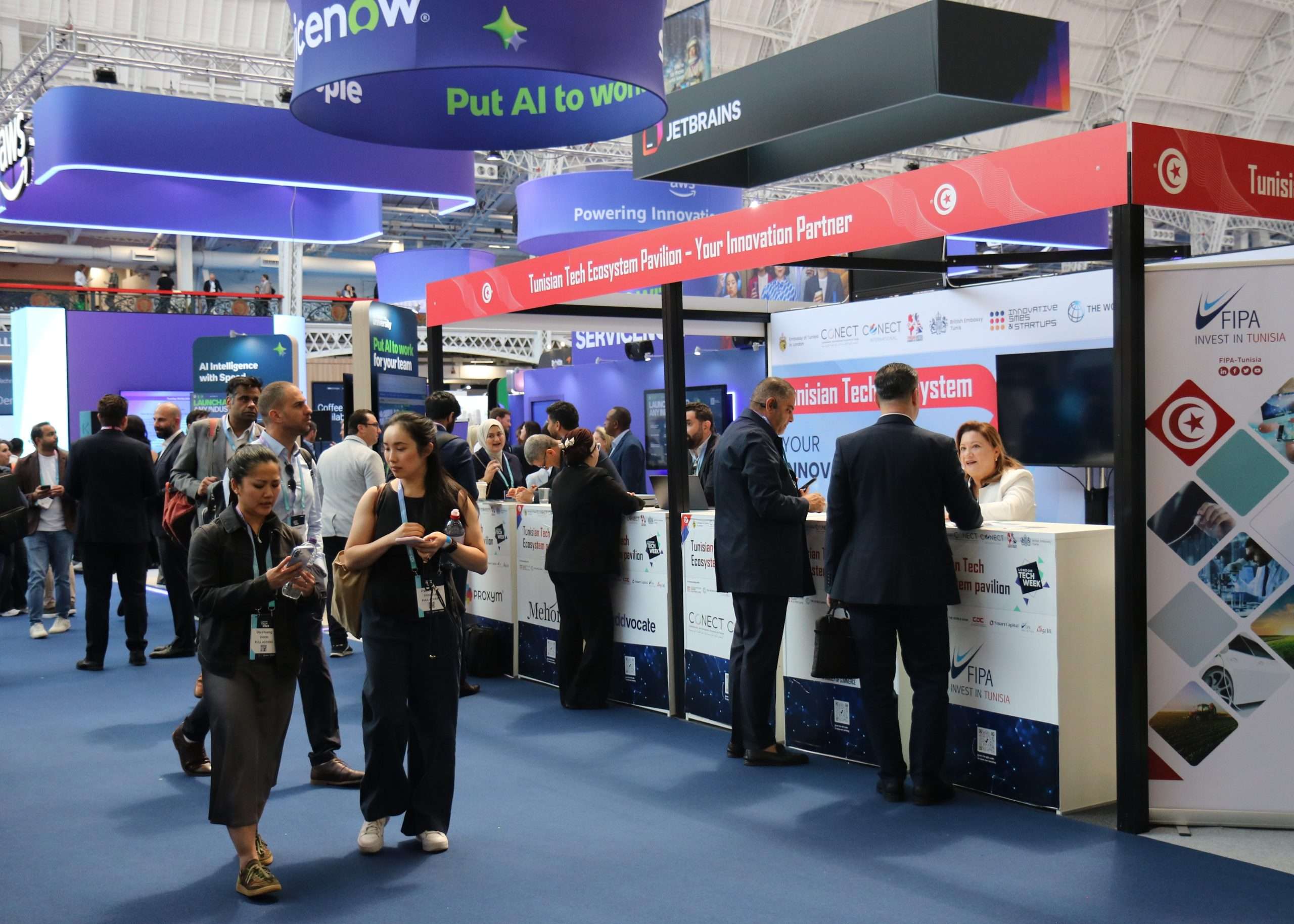
Exhibiting at a London trade show sounds fairly straightforward. Pay for a stand, bring some products, spend the day talking to potential customers and hopefully leave with enough leads to make the whole thing worthwhile.
Then you discover the stand needs electricity. And furniture. And graphics. And someone to staff it. And somewhere to store everything. And possibly Wi-Fi that costs more than your home broadband.
For a small business or startup, the real cost of exhibiting at a London event can range from a few thousand pounds to well into five figures.
So, if you’re considering your first exhibition, here’s what you should actually budget for in 2026 — and how packages that bundle together most of what you need can save you money and give you some peace of mind.
1. Exhibition space: from roughly £2,000
Your biggest expense will usually be simply getting onto the exhibition floor.
There isn’t a standard London rate. Smaller specialist events may offer packages for a few thousand pounds, while major exhibitions can more than £1,000 per square metre.
For a small company testing exhibiting for the first time, £3,000–£6,000 + VAT for the space alone is a realistic starting assumption.
And check exactly what “stand” means before signing anything.
2. The actual stand: £500–£5,000+
If you’ve bought a shell scheme, you’re usually getting the exhibition equivalent of an unfurnished flat: walls, flooring and perhaps basic lighting and a name board.
You still need to make it look like your company.
For a basic setup, you might spend £500–£1,500 on printed graphics, banners, counters and displays that can potentially be reused.
A custom-built stand is another world entirely. Once designers, builders, specialist materials, screens and installation become involved, several thousand pounds can disappear remarkably quickly.
If this is your first exhibition, reusable graphics and a simple stand are usually the more sensible option. Nobody has ever signed a £50,000 contract because your shelving had particularly beautiful curves.
3. Electricity, Wi-Fi and the boring extras: £200–£1,000+
Here lies one of the great joys of exhibiting: discovering that a plug socket is now a premium product.
A London event, earlier tis year, offered a basic 500W switched socket at around £169 on the early-booking rate. Lighting, additional power, internet connections, screens, cleaning and other services can all be separate.
Before booking, ask the organiser for the optional-services price list. It may tell you considerably more about your final bill than you imagine.
4. Staff: realistically from £150 per person, per day
Someone has to actually stand there.
If that’s you, there’s technically no additional payroll expense — although your time still has a cost, particularly when you’re the person who normally runs the business.
If you’re hiring temporary staff, remember that the legal National Living Wage for workers aged 21 and over is £12.71 an hour since April 2026. Your actual cost is likely to be higher once you account for the rate required to attract suitable event staff, agency fees where applicable and employer costs.
For budgeting purposes, allowing £150–£250 per person for a normal event day is a reasonable starting point for basic temporary staffing, with experienced salespeople, demonstrators or specialist staff costing considerably more.
5. Products, samples and giveaways: £100–£1,000+
Budget according to the cost of getting someone to remember or experience your product, instead of simply producing merchandise because exhibitions traditionally have merchandise.
For a small brand, £100–£500 might cover simple printed materials and samples. Product-heavy businesses could easily spend £1,000–£2,000 or more.
What matters is what you’re trying to achieve. A food or beauty brand, for example, will genuinely fare better with hundreds of samples rather than overly elaborate — and costly — merchandise with your logo on it. You’re welcome to spend enormous amounts of money on tote bags or magnets, but you don’t necessarily need them to make your participation in a trade show a success.
6. Transport, storage and logistics: £200–£500+
Then everything has to get there.
If your exhibition display fits into two suitcases, congratulations: you’ve won.
If you’re transporting boxes of stock, furniture, display equipment or large graphics into a major London venue, you’ll need to consider couriers, parking, loading restrictions, storage and potentially overnight accommodation for anyone travelling from outside London.
For a small London-based company with a simple setup, £200–£500 may be sufficient. Once vans, couriers and storage enter the equation, it can easily add up.
You don’t even need to be transporting items for an exhibition these days to expect to pay a premium rate to get stuff from A to B. Earlier this year, I bought a vintage bookcase on eBay for £250. To get it from Devon to London, the cheapest quote I managed to find from a delivery company was £175.
7. Consider events offering all-in-one packages
There is another model worth considering that can make exhibiting your business in London more affordable: events where most of those moving parts are bundled together.
Industry trade event Beauty Bulb Live London, taking place on 7 October 2026 at the Business Design Centre in Islington, for example, currently advertises a fixed £4,950 + VAT brand package. That includes a fully built brand pod, with its design, production, delivery and assembly handled by the organiser. The package also includes pre-event visibility, a digital platform listing, post-show buyer communications and structured introductions for selected brands.
“We are handling all logistics. It’s brand equal and human first, and we do all of the heavy lifting. We want people to leave our show feeling connected to our beauty community, and we are building something long term with this event. Our support doesn’t end once the show closes, and exhibitors remain on our digital platform, where they will be promoted to our entire sales channel network for three months post-show,” says British entrepreneur Faye Speedie, who launched Beauty Bulb in 2017.
How much should you budget for your trade show in London?
For a small business exhibiting at a London trade event in 2026, £4,000–£8,000 is a reasonable working budget for a modest professional presence, while larger shows, bigger stands and custom builds can push the cost past £10,000 very quickly.
But don’t start by asking, “How much is the stand?”
Ask what you’re getting for the money.
Does the price include the structure? Furniture? Electricity? Exhibitor passes? Marketing? Setup? Access to buyers? Lead capture? Wi-Fi?
And, most importantly, who is actually going to be in the room? Spending £5,000 to meet 50 genuinely relevant buyers could be considerably better value than spending £2,000 to meet 5,000 people who aren’t interested in buying anything from you.
Business
HMRC launches operation targeting dodgy barbers and vape shops
Published
3 weeks agoon
August 17, 2026
If you live in London and have noticed vape shops and barbers seemingly multiplying on a high street near you, you are not alone. The UK government department responsible for collecting taxes is stepping up its crackdown on suspected tax fraud and illegal activity on Britain’s high streets, with HMRC aiming to carry out more than 30,000 enforcement interventions in 2026.
Vape shops, nail salons, candy stores, barbers and other high street businesses suspected of breaking tax rules are among those in the spotlight, while members of the public are now being encouraged to also report suspicious activity.
Although not all lost tax revenue is the result of illegal businesses, the amount of tax owed that never reached HMRC is staggering. According to official government figures, the UK’s total tax gap for the 2024–25 tax year was estimated at £59.2 billion — money that HMRC says should theoretically have been collected but was not. Small businesses accounted for 62% of that tax gap, the largest share of any taxpayer group, amounting to roughly £36.7 billion.
Labour exploitation and sale of illicit goods also targeted
The enforcement drive is aimed at disrupting criminal networks involved in tax fraud, labour exploitation and the sale of illicit tobacco and vapes.
This latest push follows the launch of a £30 million High Street Organised Crime Unit in May, bringing HMRC together with Trading Standards, police, the Home Office and the National Crime Agency. HMRC has already demonstrated how the tougher approach could work. In June, officers carried out unannounced visits to six souvenir shops in central London alongside Immigration Enforcement, Trading Standards and Metropolitan Police officers.
Public urged to report suspected tax fraud
HMRC has also upgraded its online tax fraud reporting service, allowing people to provide information anonymously about suspected tax fraud, money laundering and other criminal activity.
“Too many high streets have been blighted by dodgy shops that harm local communities and undercut honest businesses.
“If you see something that doesn’t look right, like suspected tax fraud or money laundering, use HMRC’s fraud reporting service and help protect our high streets,” said Chancellor of the Exchequer John Healey.
People who believe a business may be involved in tax fraud or money laundering are being encouraged to use HMRC’s online Report Tax Fraud service rather than confront businesses themselves.
The system asks users for factual information about what they have witnessed and allows reports to be submitted anonymously.
HMRC says the intelligence will help its teams build a clearer picture of suspected criminal activity and target enforcement action more effectively as the nationwide high street crackdown gathers pace.


Trending

 Lifestyle4 weeks ago
UK Charity provides free coaching for young drivers
- Business3 weeks ago
How much does it cost for a small business to exhibit at a London event?
- Business3 weeks ago
HMRC launches operation targeting dodgy barbers and vape shops

 Lifestyle2 weeks ago
London Waterloo adds dog patrols to security team

 Good News2 weeks ago
Great Northern joins Stevenage FC players to support town’s homeless
- Business2 weeks ago
Why more UK businesses are choosing to repurpose rather than rebuild

 Good News2 weeks ago
Royal Society honours Northumbria team for reshaping STEM engagement

 Lifestyle1 week ago
243 arrests made on first full day of Notting Hill Carnival 2026