Connect with us

World

EU limits Chinese bids for medical devices

Published

on

EU limits Chinese bids for medical devices
Maroš Šefčovič, European Commissioner for Trade and Economic Security | Photo: Marzia Cosenza

The European Commission decided to exclude Chinese companies from EU government purchases of medical devices exceeding €5 million. This measure follows the conclusions of the first investigation under the International Procurement Instrument (IPI), and allows no more than 50% of inputs from China for successful bids.

This response is proportionate to China’s barriers, while ensuring that all the necessary medical devices are available for the EU healthcare system. Exceptions will be in place where no alternative suppliers exist. The measures are consistent with the EU’s international obligations, including under the WTO framework, as the EU has no binding procurement commitments vis-à-vis China.

The measure seeks to incentivise China to cease its discrimination against EU firms and EU-made medical devices and treat EU companies with the same openness as the EU does with Chinese companies and products. This is a response to China’s longstanding exclusion of EU-made medical devices from Chinese government contracts.

“Our aim with these measures is to level the playing field for EU businesses. We remain committed to dialogue with China to resolve these issues,” says Maroš Šefčovič, Commissioner for Trade and Economic Security; Interinstitutional Relations and Transparency.

Defending EU businesses from unfair treatment

Global public procurement, worth over €11 trillion per year, is an important business opportunity for European companies. The EU public procurement market remains one of the most open in the world. For example, Chinese exports of medical devices to the EU have more than doubled between 2015 and 2023.

At the same time China has erected significant and recurring legal and administrative barriers to its procurement market: 87% of public procurement contracts for medical devices in China were subject to exclusionary and discriminatory measures and practices against EU-made medical devices and EU suppliers, according to a 2025 Commission report. The report was the result of the Commission’s first investigation under the IPI Regulation, launched on 24 April 2024.

The Commission has repeatedly raised this issue with the Chinese authorities, seeking a constructive and fair solution that would enable EU companies to access the Chinese market on terms comparable to those enjoyed by Chinese firms in the EU. Despite these efforts, China has so far not offered specific commitments that would address the discriminatory measures and practices identified.

EuroNewsweek is a dynamic news platform featuring lifestyle, sustainability, successful stories, tech, leadership, creative marketing, business, and the unstoppable people behind them.

World

Pope Leo XIV diagnosed with lung cancer after successful surgery

Published

on

Pope Leo XIV diagnosed with lung cancer after successful surgery
The Vatican has indicated that the Pope is expected to remain in hospital for approximately one week. | Photo: Aike I.

Pope Leo XIV is recovering in hospital after undergoing successful lung surgery on Tuesday, 13 October 2026, with the Vatican confirming that the 71-year-old pontiff has been diagnosed with lung cancer.

The Pope underwent an operation at Rome’s Gemelli Hospital to remove the lower lobe of his right lung after doctors discovered a small nodule during routine medical examinations.

According to the Vatican, the surgery was completed successfully without complications. On Wednesday morning, 14 October, the Holy See Press Office confirmed that Pope Leo had spent a calm night in hospital, with further medical updates expected later in the day.

What happened during Pope Leo XIV’s lung surgery?

Pope Leo first revealed his upcoming operation on Sunday, 11 October, during his Angelus address in St Peter’s Square. He explained that doctors had discovered a small, localised lung nodule at an early stage and recommended its removal.

The operation took place two days later at Gemelli Hospital, with the surgical team led by Professor Stefano Margaritora.

Doctors removed the lower lobe of the Pope’s right lung using a minimally invasive, video-assisted surgical technique.

The Vatican confirmed that tissue analysis conducted during the procedure identified lung adenocarcinoma, a type of lung cancer suspected during earlier examinations.

The Pope spent approximately three hours in the operating theatre, although the surgery itself lasted around 90 minutes.

Following the procedure, he regained consciousness normally and returned to his hospital room after a short observation period.

Further examinations of the removed tissue are expected to provide additional information about his condition.

How is Pope Leo XIV recovering and when will he return?

According to the Vatican’s latest health update, Pope Leo spent a peaceful first night following surgery and remains under medical supervision at Gemelli Hospital.

The Vatican has indicated that the Pope is expected to remain in hospital for approximately one week while recovering.

All public audiences have been cancelled until 20 October, allowing the pontiff time to recuperate.

The Pope also has an international trip scheduled for 6–17 November, with planned visits to Uruguay, Argentina and Peru. However, it remains unclear whether his recovery will affect the itinerary.

Doctors have not yet announced whether additional cancer treatment will be necessary, with further test results still pending.

Continue Reading

World

Britain could get £10bn Iron Dome under Tory security plan

Published

on

Britain could get £10bn Iron Dome under Tory security plan
The Conservatives say the programme would include new interceptor missiles. | Photo: Benjamin Davies

Britain could build a £10 billion air and missile defence network designed to protect the country from drone and missile attacks under a new Conservative Party proposal.

Named “Britannia Shield”, the system would combine advanced radar, upgraded command-and-control technology, interceptor missiles and counter-drone capabilities. The Conservatives say it would strengthen protection for the UK, its overseas territories and British military bases abroad.

The proposal comes as modern conflicts demonstrate the growing threat posed by relatively cheap drones, cruise missiles and ballistic missiles. Britain’s own Strategic Defence Review has already called for stronger homeland defence and greater investment in integrated air and missile defence.

How the £10bn Britannia Shield would work

Rather than relying on a single weapon, Britannia Shield would create a layered network capable of detecting, tracking and responding to different airborne threats.

The Conservatives say the programme would include new interceptor missiles and significantly larger missile stockpiles, alongside better radar and command systems. Counter-drone technology would provide another layer of protection against smaller unmanned aircraft.

The party aims to establish an initial operational capability within five years, followed by further improvements during the next five years. The £10 billion programme would form part of a wider Conservative commitment to increase defence spending to 3% of GDP by 2030.

Kemi Badenoch has argued that Britain cannot afford to wait until an attack happens before strengthening its defences. However, she has also stressed that Britannia Shield should not be regarded as a straightforward British version of Israel’s Iron Dome.

Iron Dome is primarily designed to intercept short-range rockets and similar threats. Britain would need a broader system capable of defending a much larger territory against a wider range of weapons.

Britain joins Europe’s air-defence push

The proposal reflects a wider shift across NATO towards stronger air and missile defences.

Germany launched the European Sky Shield Initiative to encourage European countries to jointly acquire compatible air-defence equipment and missiles. Poland, meanwhile, is developing a layered system incorporating Patriot missiles, while Romania hosts a US Aegis Ashore ballistic-missile defence site.

Britain is already moving in the same direction. The 2025 Strategic Defence Review allocated up to £1 billion in new funding for homeland air and missile defence and recommended further investment in integrated systems.

Britannia Shield would go considerably further if implemented. But the plan remains a Conservative proposal rather than funded government policy, and its eventual scale would depend on a future election victory, detailed procurement decisions and the available defence budget.

Continue Reading

World

London ranked second-best city in the world for 2026

Published

on

London ranked second-best city in the world for 2026
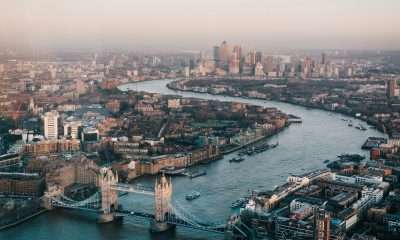
The capital took second place in Oxford Economics’ 2026 Global Cities Index. | Photo: Jacob Smith

London has been named the second-best performing city in the world for 2026, beating Paris, Tokyo and a host of major US cities in a global ranking of 1,000 urban economies.

The capital took second place in Oxford Economics’ 2026 Global Cities Index, behind only New York. Paris completed the top three, followed by Seattle and San Francisco.

Rather than focusing simply on tourism or how enjoyable a city is to live in, the annual index takes a broader view. Cities are assessed across five areas: economics, human capital, quality of life, environment and governance.

London achieved an overall score of 98.8 out of 100, just behind New York’s 100 and comfortably ahead of Paris on 93.4. Oxford Economics said New York and London remain at the top largely because of the scale of their economies and the strength of their labour markets.

Why does London rank so highly?

London’s biggest advantage is its people.

The capital ranked first in the world for human capital, scoring 100. Oxford Economics measures factors including educational attainment, universities, population growth, demographics and the ability of a city to attract skilled workers.

London benefits from its concentration of internationally renowned universities, major corporate headquarters and highly qualified workforce. It also performed strongly on economics, with a score of 86.5. Oxford Economics ranks London seventh globally in that category – and it is the only non-US city in the economic top 10.

Its performance was more mixed elsewhere. London scored 83.2 for environment and 80.5 for governance, but its quality-of-life score was lower at 77.

That distinction matters. Being second in the Global Cities Index does not necessarily mean Oxford Economics considers London the world’s second-most pleasant place to live. Paris, for example, scored 88.1 for quality of life, substantially higher than London.

Still, London’s combination of employment opportunities, skilled workers, universities and economic strength was enough to keep it ahead overall.

London beats Paris to rank second among the world’s top cities

London also remains comfortably ahead of every other British city in the 2026 ranking.

Edinburgh was the UK’s next-highest entry at 71st, while Manchester came in at 90th. Cambridge ranked 100th, Leeds 103rd, Glasgow 108th and Bristol 112th.

Manchester did receive separate recognition as one of Oxford Economics’ “Cities to Watch” for 2026. The new category highlights cities that the researchers believe are gaining momentum and could climb the rankings in future years.

At the very top, however, there has been remarkably little movement. New York, London and Paris also occupied the first three places last year.

Oxford Economics argues that the continuing dominance of these global cities reflects advantages that are difficult to replicate quickly: deep pools of skilled workers, large economies, established institutions and an ability to attract businesses and investment.

Continue Reading

Trending