World
Black Monday Sees Biggest One-Day Drop Ever in Stock Market

Published
2 years agoon

Japanese stocks suffered their biggest ever daily loss on August 5th, as fears about a US economic slowdown sent shock waves through global markets. The Black Monday saw Wall Street stocks plunged as trading began amid intensifying concerns that the US economy is heading for a recession. The Nasdaq Composite plummeted by 6.4%, following a 2.4% fall on Friday as panic about a global economic downturn gripped markets. Meanwhile, the Dow Jones Industrial Average fell 2.7%, while the broader S&P 500 sank by 4.2%. US stocks followed sharp sell-offs in Europe, where the FTSE 100 fell 2.8% and the DAX in Germany dropped 3.3%.
The Nikkei 225 index of leading stocks in Tokyo lost a staggering 4,451 points, its biggest drop in history. The index closed more than 12% down, taking its losses since early July to 25% and entering bear market territory. Social media quickly reacted to the historic drop. Indie filmmaker Michael Roland Williams took to X (formerly Twitter) to share a personal story.
“My dad’s friend returned home on Black Monday in 1987 and killed himself. I remember people jumping out of windows and offing themselves in various ways. Remember, it’s only money. Take care of yourselves.” Roland was referring to the infamous “Black Monday” in October 1987, when global markets plunged and the Nikkei lost 3,836 points.
My dad's friend returned home on Black Monday in 1987 and killed himself. I remember people jumping out of windows and offing themselves in various ways. Remember, it's only money. Take care of yourselves. #BlackMonday #recession #stockmarketcrash https://t.co/PQyCjOPFRQ
— Michael Roland Williams (@MichaelRoland) August 5, 2024
Author and trader Simon Ree also commented on the situation:
“The sheer amount of fear and panic generated by what was, as of Friday, a 5.7% pullback from all-time highs in the $SPX – which was still up +13% YTD, mind you – tells you all you need to know about how crowded positioning was.”
The sheer amount of fear and panic generated by what was, as of Friday, a 5.7% pullback from all-time highs in the $SPX – which was still up +13% YTD, mind you – tells you all you need to know about how crowded positioning was. https://t.co/HExwOl6j0E
— Simon Ree (@simon_ree) August 5, 2024
What Years Did the Stock Market Collapse?
The stock market has experienced several significant collapses throughout history, each marking a period of severe economic turmoil. The most infamous crash occurred in 1929, marking the beginning of the Great Depression. On October 29, 1929, known as Black Tuesday, the stock market collapsed, leading to widespread decade-long economic depression.
Another notable crash happened on October 19, 1987. Referred to as Black Monday, stock markets around the world plummeted, with the Dow Jones Industrial Average falling by 22.6% in a single day.
More recent collapses include the dot-com bubble burst in 2000 and the global financial crisis in 2008. The 2008 collapse was triggered by the subprime mortgage crisis, leading to a severe global recession.
EuroNewsweek is a dynamic news platform featuring lifestyle, sustainability, successful stories, tech, leadership, creative marketing, business, and the unstoppable people behind them.

You may like

Britain could get £10bn Iron Dome under Tory security plan


EU approves biggest overhaul of medicines rules in more than 20 years


UK plans new disinformation agency branded ‘Ministry of Truth’ by critics


Starbucks launches training to support customers who stammer


EU proposes €489 million for storm recovery in four countries


How to pitch your beauty brand to retail buyers at trade shows
World
Britain could get £10bn Iron Dome under Tory security plan

Published
1 day agoon
October 6, 2026
Britain could build a £10 billion air and missile defence network designed to protect the country from drone and missile attacks under a new Conservative Party proposal.
Named “Britannia Shield”, the system would combine advanced radar, upgraded command-and-control technology, interceptor missiles and counter-drone capabilities. The Conservatives say it would strengthen protection for the UK, its overseas territories and British military bases abroad.
The proposal comes as modern conflicts demonstrate the growing threat posed by relatively cheap drones, cruise missiles and ballistic missiles. Britain’s own Strategic Defence Review has already called for stronger homeland defence and greater investment in integrated air and missile defence.
How the £10bn Britannia Shield would work
Rather than relying on a single weapon, Britannia Shield would create a layered network capable of detecting, tracking and responding to different airborne threats.
The Conservatives say the programme would include new interceptor missiles and significantly larger missile stockpiles, alongside better radar and command systems. Counter-drone technology would provide another layer of protection against smaller unmanned aircraft.
The party aims to establish an initial operational capability within five years, followed by further improvements during the next five years. The £10 billion programme would form part of a wider Conservative commitment to increase defence spending to 3% of GDP by 2030.
Kemi Badenoch has argued that Britain cannot afford to wait until an attack happens before strengthening its defences. However, she has also stressed that Britannia Shield should not be regarded as a straightforward British version of Israel’s Iron Dome.
Iron Dome is primarily designed to intercept short-range rockets and similar threats. Britain would need a broader system capable of defending a much larger territory against a wider range of weapons.
Britain joins Europe’s air-defence push
The proposal reflects a wider shift across NATO towards stronger air and missile defences.
Germany launched the European Sky Shield Initiative to encourage European countries to jointly acquire compatible air-defence equipment and missiles. Poland, meanwhile, is developing a layered system incorporating Patriot missiles, while Romania hosts a US Aegis Ashore ballistic-missile defence site.
Britain is already moving in the same direction. The 2025 Strategic Defence Review allocated up to £1 billion in new funding for homeland air and missile defence and recommended further investment in integrated systems.
Britannia Shield would go considerably further if implemented. But the plan remains a Conservative proposal rather than funded government policy, and its eventual scale would depend on a future election victory, detailed procurement decisions and the available defence budget.

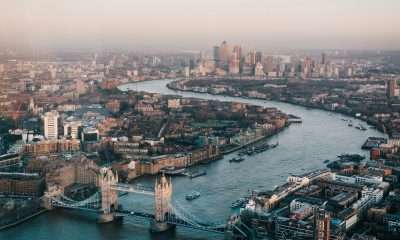
London has been named the second-best performing city in the world for 2026, beating Paris, Tokyo and a host of major US cities in a global ranking of 1,000 urban economies.
The capital took second place in Oxford Economics’ 2026 Global Cities Index, behind only New York. Paris completed the top three, followed by Seattle and San Francisco.
Rather than focusing simply on tourism or how enjoyable a city is to live in, the annual index takes a broader view. Cities are assessed across five areas: economics, human capital, quality of life, environment and governance.
London achieved an overall score of 98.8 out of 100, just behind New York’s 100 and comfortably ahead of Paris on 93.4. Oxford Economics said New York and London remain at the top largely because of the scale of their economies and the strength of their labour markets.
Why does London rank so highly?
London’s biggest advantage is its people.
The capital ranked first in the world for human capital, scoring 100. Oxford Economics measures factors including educational attainment, universities, population growth, demographics and the ability of a city to attract skilled workers.
London benefits from its concentration of internationally renowned universities, major corporate headquarters and highly qualified workforce. It also performed strongly on economics, with a score of 86.5. Oxford Economics ranks London seventh globally in that category – and it is the only non-US city in the economic top 10.
Its performance was more mixed elsewhere. London scored 83.2 for environment and 80.5 for governance, but its quality-of-life score was lower at 77.
That distinction matters. Being second in the Global Cities Index does not necessarily mean Oxford Economics considers London the world’s second-most pleasant place to live. Paris, for example, scored 88.1 for quality of life, substantially higher than London.
Still, London’s combination of employment opportunities, skilled workers, universities and economic strength was enough to keep it ahead overall.
London beats Paris to rank second among the world’s top cities
London also remains comfortably ahead of every other British city in the 2026 ranking.
Edinburgh was the UK’s next-highest entry at 71st, while Manchester came in at 90th. Cambridge ranked 100th, Leeds 103rd, Glasgow 108th and Bristol 112th.
Manchester did receive separate recognition as one of Oxford Economics’ “Cities to Watch” for 2026. The new category highlights cities that the researchers believe are gaining momentum and could climb the rankings in future years.
At the very top, however, there has been remarkably little movement. New York, London and Paris also occupied the first three places last year.
Oxford Economics argues that the continuing dominance of these global cities reflects advantages that are difficult to replicate quickly: deep pools of skilled workers, large economies, established institutions and an ability to attract businesses and investment.
World
London gets green light for more skyscrapers in the City
Published
1 week agoon
September 30, 2026
London’s skyline could be heading even higher after the government cleared the way for the City of London’s long-term development plan to move forward.
Housing Minister Matthew Pennycook had intervened in the City Plan 2040 in June amid concerns that future London skyscrapers could harm the setting of the Tower of London, a UNESCO World Heritage Site.
Planning inspectors were asked to reconsider the boundaries of the City Cluster – the part of the Square Mile where many of London’s tallest office towers are concentrated – and compare the City’s plans with an alternative proposed by Historic England.
Inspectors have now backed the City of London Corporation’s approach. Pennycook accepted their conclusions and withdrew the government intervention on 23 September, removing a major obstacle to the plan.
Why were new City of London skyscrapers under scrutiny?
At the heart of the dispute was a familiar London planning problem: how to make room for modern development without overwhelming some of the capital’s most important historic landmarks.
The City Cluster, around Bishopsgate and Leadenhall Street, already contains skyscrapers including 22 Bishopsgate, the Walkie Talkie and the Cheesegrater. City Plan 2040 provides the framework for further development as the Square Mile seeks more office space.
Historic England had proposed different boundaries for tall buildings because of concerns about the impact of future towers on the Tower of London and its surroundings.
After an additional examination, planning inspectors concluded that the City’s approach offered an appropriate balance between heritage protection and economic growth.
That does not amount to blanket permission for new skyscrapers. Individual developments will still require planning approval, while their impact on heritage sites will need to be assessed.
However, the decision gives developers much greater certainty about where the City intends to concentrate future tall buildings.
How could City Plan 2040 change London’s skyline?
City Plan 2040 will guide development across the Square Mile until 2040, with the City Cluster expected to accommodate much of its future high-rise growth.
Protecting the Tower of London will remain part of that process. Pennycook said the planning inspectors had carried out a “thorough and considered assessment”, while heritage policies and site-specific Heritage Impact Assessments will continue to apply to future developments.
Conservation concerns are unlikely to disappear. Historic England has repeatedly highlighted the importance of protecting the setting of the Tower of London as the City skyline grows around it.
City Plan 2040 can now progress towards formal adoption, with planning inspectors expected to produce their final report before the City Corporation completes its own approval process.


Trending

 Business3 weeks ago
What Graduates Need to Know About the Retail Landscape

 Lifestyle4 weeks ago
Why Brits are being told to keep three days of emergency supplies at home?

 Travel3 weeks ago
Robots are now parking cars at Gatwick Airport

 Lifestyle3 weeks ago
Sculpture celebrating Glasgow’s famous ‘fire dog’ unveiled

 Lifestyle3 weeks ago
Innovating in manufacturing: the science behind everyday products

 Marketing3 weeks ago
Q4 Is Here: What Every UGC Creator Should Be Doing Now!

 Business3 weeks ago
The impact of office amenities on staff retention

 Sustainability3 weeks ago
Why Sustainable Innovation is Key for Modern Industry