Sustainability
Verizon unveils finalists of its Unloc Young Entrepreneurs Challenge

Published
2 years agoon

Five young entrepreneurs have been named as finalists in the latest Young Entrepreneurs Challenge (YEC), an initiative launched by Verizon and Unloc.
The challenge, now in its seventh year, aims to discover the business leaders of tomorrow by tasking young European entrepreneurs between the ages of 16 and 25 to devise a tech-led business idea that addresses a key industry or societal issue.
This year’s challenge has brought to light a number of business models that tackle current sustainability and healthcare challenges including water restoration robots, biodegradable textiles from kombucha by-products, reforestation hexapod robots, a floating solar solution and a robotic glove for stroke rehabilitation. The team received over 100 competitive and innovative business ideas from a wide range of countries across Europe including the UK, Ireland, Spain, Italy, France, Germany, Switzerland, Belgium, Greece, Slovakia, Turkey, Portugal, Austria, Ukraine, Bulgaria, Estonia and Poland.
“Throughout the past seven years, the Young Entrepreneurs Challenge has been a brilliant opportunity to discover young and promising talent across Europe. There is nothing like the imagination and innovation of a young mind. The YEC serves as a platform to help bring their ideas to life,” said Sanjiv Gossain, General Manager and Head of EMEA for Verizon Business.
“Young entrepreneurs in Europe often face hurdles and scepticism in accessing funding and mentorship. Verizon Business is proud to play a small role in helping this next generation of tech leaders stay a step ahead in the industry, as they work to make a positive impact around the world.”
“We are in an era where technological innovation is crucial for tackling complex challenges in sustainability, climate change, and health. Investing in the next generation of leaders and their ideas is essential to addressing these issues,” said Hayden Taylor, Co-Founder and Chief Executive of Unloc. “Each year, we are amazed by the ingenuity of young entrepreneurs and are impressed to see the innovative ideas submitted for the Young Entrepreneurs Challenge.”
The five finalists will now compete head-to-head in a grand finale held in March 2025, pitching their business concept live to a panel of expert judges and invited guests representing both the worlds of business and education.
The winner receives £10,000 (€11,750), mentorship and a technology support package to help kickstart their business. In addition, the winner will also receive a ticket to attend the Global One Young World 2025 Munich Summit.
Each runner-up will receive £977 (€1175) to fund their start-up business, a personalised development plan that focuses on key priorities, and access to a series of masterclasses over the next year that will pair the finalists with various industry experts.
Here are the 2025 finalists:
Aleksandra Daniljuk – AquaRenew
Aleksandra aims to address the global environmental crisis of water pollution caused by excess nitrogen and phosphorus in water bodies. Her solution involves small, solar-powered robots that use wire meshes to collect harmful algae blooms, release oxygen through air stones to combat oxygen depletion, and utilise zeolite biofilters to absorb excess nutrients, thereby preventing further eutrophication.
The key selling point is its self-sustaining business model. The collected algae will be sold to businesses that convert them into biofuels and other sustainable products, creating a revenue stream to fund more robots. This approach not only restores aquatic ecosystems but also fosters sustainability and generates economic value.
Luisanny Martinez – Skomby by Tex
Skomby by Tex is a solution to modern challenges in fashion and sustainability that offers a sustainable, biodegradable material made from kombucha fermentation by-products. The eco-friendly alternative to traditional leather and textiles is crafted from bacterial cellulose, offering a lightweight, durable, and unique texture.
The material is 100% biodegradable and compostable, and can even be reused as planting capsules. To further enhance the sustainable model of the business, the team uses natural dyes like turmeric, spirulina, and saffron, ensuring no toxic chemicals are involved.
Marta Bernardino – Trovador
The precision reforestation market is projected to reach $9.77 billion by 2033, growing at a 5.74% CAGR, with high demand from the private sector. Recognising a billion-dollar opportunity, Marta developed Trovador, a reforestation robotics company that combats climate change by planting trees in hard-to-reach areas. Unlike drones, which have a low survival rate for seeds, Trovador’s hexapod robots plant saplings with a 90% survival rate. These AI-driven robots navigate challenging terrains like cliffs and slopes, ensuring effective reforestation.
The service is quite simple and self-explanatory: clients select the planting site, the robot is deployed, and reforestation is monitored remotely. With just £2.5 (€3) per tree, Trovador is 30% more affordable than traditional methods, while excelling in speed, safety, and sustainability.
Sebastiaan Schalkwijk – Solar Sub
Solar Sub’s floating solar solution revolutionises renewable energy by placing solar panels on water bodies, maximising land use and harnessing natural cooling. This approach enhances system efficiency, increasing energy yield by up to 27% compared to traditional solar systems.
Sebastiaan adopts a licensing business model which allows rapid scaling without significant capital investment. This reduces upfront costs and risks, enabling us to focus on strategic partnerships. His model has gained traction with support from key industry players, confirming market interest and feasibility.
Zain Sumdani – Exoheal
Exoheal addresses the global shortage of physiotherapists and the inaccessibility of effective therapy with a robotic glove and a machine-learning-powered app. This solution delivers personalised, real-time therapy, enabling stroke recovery from home. Early trials show a 50% improvement in recovery time compared to traditional methods.
Exoheal app connects patients with hospitals and clinics, allowing remote monitoring and real-time feedback. Its modular design and scalable production ensure affordability and the ability to meet global demand.
EuroNewsweek is a dynamic news platform featuring lifestyle, sustainability, successful stories, tech, leadership, creative marketing, business, and the unstoppable people behind them.

You may like

What is the best way to manage rural property sustainably?


Britain could get £10bn Iron Dome under Tory security plan


EU approves biggest overhaul of medicines rules in more than 20 years


UK plans new disinformation agency branded ‘Ministry of Truth’ by critics


Starbucks launches training to support customers who stammer


EU proposes €489 million for storm recovery in four countries
Sustainability
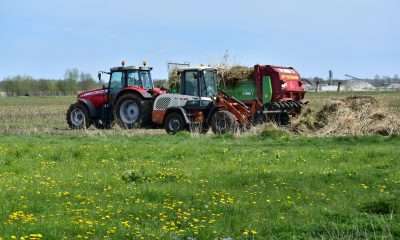
What is the best way to manage rural property sustainably?

Published
5 days agoon
October 9, 2026
Rural property management works best when each decision supports productive land, healthy soil and long-term resilience. That requires a clear view of how fields, access routes, drainage and natural habitats interact across the property. Seasonal records and regular inspections can reveal problems before they become costly.
Effective planning also means understanding local rainfall patterns, soil types and the demands of different land uses. Setting maintenance priorities around these factors helps landowners allocate resources efficiently, prevent unnecessary ground disturbance and maintain reliable access throughout the changing seasons.
From soil compaction to unmanaged vegetation, early action helps protect the land’s value whilst keeping day-to-day work practical.
Balancing Land Use and Environment
Start by mapping the property according to current use, soil condition, slope and water movement. This makes it easier to identify productive areas alongside buffer strips, hedgerows and wetter ground that may need protection. Established sustainable land management strategies support this type of joined-up planning.
Avoid treating every hectare in the same way. A frequently used paddock may need aeration and controlled access, whilst a field beside a stream may benefit from a wider vegetated margin. Rotating livestock or machinery routes can also reduce repeated pressure on vulnerable soil. Review the map after heavy rain and during dry periods, as these conditions often expose drainage faults, bare patches and erosion channels.
Modern Techniques for Ground Care
Modern ground care begins with the condition beneath the surface. Test soil at consistent locations and record pH, nutrient levels, organic matter and signs of compaction. If water pools after moderate rainfall or plant roots remain shallow, aeration or subsoiling may improve drainage and root development.
Match each operation to suitable ground conditions. Harrowing can remove dead material and improve the surface, while rolling may help repair minor disturbance when the soil has enough moisture to settle without becoming compressed. For work requiring specialist equipment, searching for agricultural contractors near you can help landowners assess support for field topping, flail mowing, cultivation and compaction relief. Agree the required outcome, field access and timing before work starts, then avoid scheduling heavy machinery when the ground is saturated.
Partnering with Ground Work Experts
Choose ground work support according to the property’s actual condition, not a fixed annual routine. A capable expert should ask about previous treatments, drainage patterns, access restrictions and your plans for the land. Clear answers help determine whether the site needs a single operation or work completed in stages.
Ask how the provider will limit soil disturbance and respond if conditions change. Useful discussions should cover equipment size, expected working depth, disposal of cut material and measures for protecting gateways or nearby water. Wider guidance on practical land management can help you understand how different methods affect vegetation, erosion and soil health. Record the agreed scope in writing, including dates and responsibilities, then inspect the area together once the job is complete.
Measuring the Impact of Good Management
Useful measurement relies on a small set of indicators collected consistently. Photograph fixed points every season and note standing water, bare soil, weed coverage and vegetation density. Soil tests taken from the same marked locations can show whether pH or organic matter is changing. Maintenance records should also include dates, weather conditions, treatment areas and equipment used.
Connect these observations to practical outcomes. Fewer waterlogged patches may mean access improves after rain, while stronger grass coverage can reduce exposed soil. Compare results over several seasons because one unusually wet or dry year can distort the picture. If a treatment produces little improvement, review its timing and suitability before repeating it. A well-kept record turns the next site inspection into a focused decision about the specific field, drainage line or gateway needing attention.
Sustainability
Cadbury and other major biscuit brands to ditch plastic trays across Europe

Published
1 month agoon
September 7, 2026
Some familiar biscuit packets are losing their plastic trays as part of a packaging overhaul expected to remove around 2,200 tonnes of virgin plastic a year across Europe.
Mondelēz International, the company behind Cadbury, Oreo and several other major snack brands, has replaced rigid PET plastic trays with paper alternatives across more than 115 cookie and biscuit products sold in over 25 European markets.
For UK shoppers, the change includes Cadbury Crunchy Melts, Cadbury Chocolate Chip Cookies and LU Petit Cookies. The trays are made from FSC-certified paper, although the products will still retain other packaging, including their outer wrappers.
The company estimates the switch will cut the amount of virgin plastic used in the affected packaging by around 80% compared with the previous combination of plastic trays and outer wrapping. That calculation is based on projected production volumes for the 2026 financial year.
More than 115 products are getting new trays
The change stretches well beyond the UK. Products sold under LU, Milka, Granola, Cadbury, Marabou, Chips Ahoy!, Lacta and Freia are included, covering markets such as France, Germany, Spain, Poland and Ireland as well as the Nordic countries.
Together, the affected lines account for roughly 28,000 tonnes of biscuits and cookies produced annually, according to Mondelēz.
This isn’t the company’s first attempt to reduce the amount of virgin plastic in its packaging. Some trays used for brands including Oreo, Cadbury, Milka and Chips Ahoy! already contain around 80% recycled PET, while Cadbury trialled paper Heroes tubs in the UK in 2025.
Food companies face growing pressure over plastic use
The move comes as manufacturers face both consumer and regulatory pressure to reduce their reliance on new plastic.
In the UK, the Plastic Packaging Tax applies to plastic packaging containing less than 30% recycled plastic. Since April 2026, the charge has been £228.82 per tonne, giving manufacturers a direct financial incentive to increase recycled content or move away from plastic altogether.
Recent HMRC figures show the scale of the issue. Of the plastic packaging manufactured or imported into the UK in 2025/26, 37% was declared taxable, while 51% met the threshold of containing at least 30% recycled material. The tax raised £250 million during the financial year.
Sustainability
European Sustainable Energy Week to Kickstart in Brussels
Published
4 months agoon
June 9, 2026
The European Sustainable Energy Week (EUSEW) 2026 opens in Brussels this morning, marking the start of the event’s landmark 20th edition. Policymakers, industry leaders, researchers, innovators and civil society groups are converging on the Belgian capital for three days of debate, with a programme built around the theme “A clean, secure and competitive Energy Union”. More than 50 policy sessions, an Energy Fair and the annual EUSEW Awards are among the highlights of this year’s event, which will run until 11 June.
Milestone 20th Edition Focused on Europe’s Energy Future
EUSEW 2026 marks two decades of Europe’s flagship clean‑energy event. Since its inception, the week has grown into the continent’s largest annual gathering dedicated to renewables and energy efficiency. This year’s edition is hybrid, taking place both in Brussels and online, with sessions hosted at the European Commission’s Charlemagne building and the NH Brussels EU Berlaymont hotel.
The opening day features a panel bringing together former European Commissioners Andris Piebalgs, Günther Oettinger, Miguel Arias Cañete and Kadri Simson, alongside the current Commissioner for Energy, Dan Jørgensen. And over the coming days, themes such as energy efficiency, affordability and decarbonisation are set to ignite discussions.
Key Speakers and Programme Highlights
2026’s programme brings together a wide range of speakers shaping Europe’s clean‑energy transition. Alongside the Commissioners’ panel and keynote contributions from senior EU policymakers and leading industry voices, the agenda also features specialised debates. One of the 20 panels scheduled for the second day will examine how AI‑powered grids can secure Europe’s energy future. The momentum continues on Thursday, 11 June, when another full day of 20 panels will tackle some of the week’s most technical questions, including a session on how fair electricity taxation can support SMEs as they navigate the energy transition.
The EUSEW Awards Ceremony takes place on 9 June at 10:00 CET, celebrating outstanding achievements in three categories: Local Energy Action, Women in Energy and SMEs Driving Energy Efficiency. These awards recognise individuals and organisations driving meaningful progress in energy efficiency and renewable technologies.
A Europe‑Wide Celebration of Clean Energy
Although the main conference runs from 9 to 11 June, EUSEW extends far beyond Brussels. Sustainable Energy Days, held between March and June, bring the clean‑energy conversation to communities across Europe and beyond. These locally organised events allow citizens, businesses and public bodies to engage directly with the energy transition, making EUSEW a truly continent‑wide initiative.
The 2026 edition also marks the start of the mandate for the new cohort of 30 Young Energy Ambassadors, selected from across Europe to represent the next generation of clean‑energy leaders. Their involvement underscores the EU’s commitment to ensuring that young professionals play an active role in shaping the future of the energy transition.


Trending

 Lifestyle4 weeks ago
Innovating in manufacturing: the science behind everyday products

 Business4 weeks ago
The impact of office amenities on staff retention

 Lifestyle4 weeks ago
Sculpture celebrating Glasgow’s famous ‘fire dog’ unveiled

 Marketing4 weeks ago
Q4 Is Here: What Every UGC Creator Should Be Doing Now!
- World4 weeks ago
EU proposes €489 million for storm recovery in four countries

 Lifestyle4 weeks ago
Why the UK remains a top destination for international residents

 Lifestyle4 weeks ago
How to manage exam stress and stay focused

 Lifestyle4 weeks ago
How to research your family history and build a more accurate family tree