Lifestyle
The Neuroscience Behind Our Discomfort With Grief

Published
10 months agoon

Grief has a way of clearing rooms.
People mean well. They send a message once. They hesitate over the second. They wait for a “better moment,” assuming the intensity will pass, that the grieving person will soon return to something more familiar, more manageable. Slowly, contact thins out. Not because love disappeared, but because discomfort took over.
What we often call social awkwardness around grief is something more fundamental. It is a nervous system response, shaped by biology, reinforced by culture, and rarely examined closely enough to change.
From a neuroscience perspective, grief destabilises what the brain works hardest to preserve: predictability, emotional equilibrium, and a sense of control. Health psychologist Kelly McGonigal has shown that stress is not just about what happens to us, but about whether we believe we have the resources to meet what is happening. Grief, especially someone else’s grief, confronts us with a situation that cannot be fixed, reframed quickly, or solved through action. The nervous system reads this as overload.
When people pull away from someone who is grieving, it is often because their own stress response is activated. Heart rate increases. Emotional vigilance rises. There is a subtle sense of threat, not from the person, but from the depth of feeling they represent. Distance becomes a way to downregulate.
This response is amplified by how little emotional literacy most adults have been taught. Psychologist Mark Brackett, director of Yale’s Center for Emotional Intelligence, has spent decades studying how poorly equipped many people are to recognise, tolerate, and regulate strong emotions, especially those they did not choose. Grief sits high on that list. It is intense, ambiguous, and resistant to reassurance. Without the skills to sit with it, avoidance becomes the default.
There is also a happiness problem embedded in this discomfort. Western culture places a high value on positive affect, optimism, and emotional uplift. Grief disrupts this narrative. It does not move neatly from pain to growth. It lingers. It loops. It coexists with moments of normalcy and then resurfaces unexpectedly. According to happiness researcher Laurie Santos, one of our most persistent myths is that well-being means feeling good feelings more often and bad feelings less. Grief violates that assumption entirely.
Being close to someone who is grieving forces us to confront the limits of that myth. It reminds us that a meaningful life includes loss, that emotional pain cannot always be optimised away, and that no amount of positive thinking guarantees safety. For many people, this confrontation is deeply unsettling.
There is another layer to this avoidance that receives even less attention: cumulative stress on the body. Health psychology research, including the work of Lisa Schulman, highlights how exposure to prolonged emotional strain can tax the nervous system, particularly when individuals lack recovery strategies. Sitting with grief can feel physically draining because, in a very real sense, it is. Muscles tense. Breathing becomes shallow. Emotional regulation requires effort. Without awareness, people interpret this physiological fatigue as a sign they are doing something wrong, rather than as a natural response to proximity with pain. Rather than slowing down and supporting their own regulation, many people step back entirely. Disappearance becomes a form of self-protection.
This pattern is rarely malicious. Most people who withdraw from someone grieving are not indifferent. They are overwhelmed, uncertain, and poorly supported by cultural norms that prioritise composure and forward motion over emotional endurance. We have few shared rituals for ongoing grief, and even fewer models for sustained presence.
For the grieving person, however, the impact is profound. Silence is often more painful than imperfect words. Distance can feel like abandonment layered on top of loss. It is easy to internalise this withdrawal as evidence that grief is too much, that one’s pain has made them unlovable or inconvenient.
Neuroscience offers a different interpretation. The avoidance says more about collective nervous system limits than about the worthiness of grief. It reflects a society that has not learned how to stay regulated in the presence of suffering, and therefore mistakes discomfort for danger. If we want this to change, the solution is not asking people to say the right thing. It is teaching emotional literacy, stress regulation, and tolerance for emotional ambiguity. It is normalising the idea that presence does not require fixing, cheering up, or offering perspective. It requires steadiness.
Grief will likely always unsettle us. It reminds us of our attachments, our vulnerability, and the impermanence we work hard to forget. But discomfort does not have to lead to disappearance. With better understanding of how our brains and bodies respond to loss, we can learn to stay, even when every instinct tells us to step away.
I support people through grief using mindfulness, movement, and science by helping them access resilience, rebuild trust in themselves, and realise they're not as powerless as they feel.

You may like


Nearly half of Europe’s longest shopping street becomes traffic-free


Beauty Bulb Live debuts first in-person edition in London


Police imposes strict conditions on Palestine march in London this Saturday
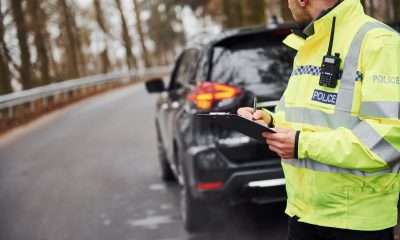

Number of UK drivers caught ignoring medical licence restrictions soars


How cities can build more efficient and sustainable waste systems


How to prepare for university admissions tests without letting stress take over
Lifestyle
Nearly half of Europe’s longest shopping street becomes traffic-free

Published
2 weeks agoon
October 26, 2026
Nearly 1km of London’s Oxford Street, widely regarded as Europe’s longest continuous shopping street, became traffic-free on Monday, 26 October 2026.
The pedestrianisation scheme, introduced by Mayor of London Sadiq Khan, prevents cars, buses, taxis and bicycles from using the stretch between Orchard Street, near Selfridges, and Great Portland Street, east of Oxford Circus.
Stretching approximately 1.9km through central London, Oxford Street is one of Europe’s most recognisable shopping destinations. The new restrictions mean that almost half of the famous retail thoroughfare is now traffic-free.
The changes form part of a wider regeneration project designed to make Oxford Street safer, improve the shopping experience and attract more visitors to central London.
However, the new restrictions also mean significant changes for bus passengers, cyclists, motorists and people travelling to the area.
Which parts of Oxford Street are closed and what are the new restrictions?
The traffic-free section covers approximately 900 metres of Oxford Street, including the busy Oxford Circus shopping area.
According to Transport for London (TfL), cars, buses, taxis, private hire vehicles, bicycles, e-scooters and pedicabs are no longer permitted along the affected stretch.
Emergency vehicles and mobility scooters retain access, while authorised delivery and servicing vehicles can enter between midnight and 7am.
Several roads crossing Oxford Street remain open to north-south traffic, including Regent Street, Duke Street and Davies Street.
The changes have also affected public transport. Bus routes 7, 94, N7, N113 and N137 now terminate at Marble Arch, while routes 98, 139, 390, N98 and N207 have been diverted through surrounding streets.
Some replacement bus stops are approximately 200 metres from the pedestrianised area.
Despite these changes, shoppers can continue accessing Oxford Street using the London Underground and Elizabeth line.
Nearby stations include Oxford Circus, Bond Street, Marble Arch and Tottenham Court Road. TfL advises passengers to allow extra time and check their journeys before travelling.
Why is Oxford Street being pedestrianised and what happens next?
The closure marks the first stage of a long-awaited plan to transform one of Britain’s most recognisable shopping destinations.
Oxford Street attracts approximately 500,000 visitors daily, according to estimates cited by the Mayor’s office. However, the area has faced growing competition from online shopping and changing consumer habits.
The departure of major retailers, including Topshop and House of Fraser, has also highlighted the challenges facing the famous shopping district.
Sadiq Khan hopes the pedestrianisation will encourage investment, support businesses and create a more attractive environment for shoppers and tourists.
The project has faced opposition from some local residents, who have raised concerns about increased congestion on surrounding roads.
Further improvements are planned for 2027, including new seating, trees, public spaces and improved signage.
Lifestyle
Police imposes strict conditions on Palestine march in London this Saturday
Published
1 month agoon
October 9, 2026
The Metropolitan Police has announced strict conditions for a major pro-Palestine demonstration in central London on Saturday, 10 October 2026, with up to 10,000 people expected to attend.
The Palestine Coalition march will begin gathering on the Embankment at midday before travelling through Westminster and ending with a rally in Whitehall.
Police have imposed restrictions on the route, gathering areas and finishing times under the Public Order Act. A significant police presence is also planned, with officers aiming to prevent disruption while protecting the right to peaceful protest.
Palestine march route and restrictions confirmed
Protesters must follow a designated route starting at Victoria Embankment before crossing Westminster Bridge. The procession will then continue along York Road, Waterloo Bridge and the Strand before reaching Whitehall.
Participants must remain within specified gathering areas before the march begins. They are also prohibited from entering an emergency access lane on Westminster Bridge and Westminster Bridge Road.
Once protesters reach Whitehall, speeches and music must finish by 5.30pm. The entire rally must conclude by 6.30pm.
Police have also authorised additional powers under Section 60AA of the Criminal Justice and Public Order Act 1994.
These allow officers to require someone to remove a face covering if they reasonably believe it is being worn primarily to conceal their identity.
A separate counter-protest organised by Stop The Hate is also expected.
Police warn of disruption and possible arrests
Deputy Assistant Commissioner Carl Galvin, who is leading the operation, said the demonstration could have a greater impact on communities because it falls close to the third anniversary of the 7 October 2023 Hamas attacks on Israel.
“Ahead of the protest we have been in constructive discussion with the Palestine Coalition, as well as partners, residents, businesses, faith and community groups. We know Saturday’s event, so close to the third anniversary of the terror attack on Israel, has the potential to have a greater impact on communities than the previous national matches,” says Galvin.
Saturday’s demonstration is expected to attract between 7,000 and 10,000 participants across the planned events.
Anyone travelling through central London should anticipate disruption around Westminster Bridge, Waterloo Bridge, the Strand and Whitehall.
Lifestyle
Number of UK drivers caught ignoring medical licence restrictions soars
Published
1 month agoon
October 8, 2026
Hundreds of UK motorists are receiving driving licence endorsements for driving while medically unfit, with new figures revealing a dramatic 238% increase in just three years.
Data obtained from the Driver and Vehicle Licensing Agency (DVLA) shows endorsements for three medical-related driving offences jumped from 198 in 2022 to 669 in 2025.
Road safety charity IAM RoadSmart has warned that the trend raises serious concerns about motorists continuing to drive despite medical restrictions. The sharp rise has prompted fresh concerns about road safety, particularly as drivers with medical restrictions may put themselves and other road users at risk.
Working-age drivers account for most offences
The figures cover drivers using a vehicle after their licence was revoked or refused on medical grounds, making false declarations about their fitness to drive, and driving with uncorrected defective eyesight.
Driving after medical licence revocation or refusal accounted for 646 of the 669 endorsements recorded in 2025.
Surprisingly, older motorists were not responsible for most cases. Working-age adults accounted for 84% of offences involving medical licence revocation or refusal, compared with just 10% among drivers aged 65 and over.
IAM RoadSmart believes greater use of automatic number plate recognition (ANPR) technology could help explain the rise in detected offences. However, this has not been established as the cause.
“While the numbers are relatively low, they still equate to two people every day and the trend is heading in the wrong direction. Greater use of ANPR enforcement is likely to be the most plausible cause behind the increase, but it still paints a worrying picture of individuals that are unwilling to stop driving, despite being told not to.
The safety implications are significant. In 2025, there were 1,192 fatal or serious road casualties in collisions where illness, disability or defective eyesight was recorded as a contributing factor,” said IAM RoadSmart Director of Policy and External Communications, Nicholas Lyes.
DVLA medical rules: Drivers risk £1,000 fine
Under current DVLA rules, motorists must report medical conditions that could affect their ability to drive safely.
These include certain heart conditions, epilepsy, diabetes, sleep apnoea and eyesight problems. Drivers must also notify the DVLA if an existing condition worsens.
Failing to disclose a relevant medical condition can result in a fine of up to £1,000. Motorists could also face prosecution if they are involved in an accident.
Drivers must surrender their licence if a doctor advises them to stop driving for at least three months or they no longer meet medical driving standards.
Meanwhile, DVLA processing times have improved considerably. Average medical assessment waiting times fell from 96 working days in 2022 to 45 days in 2025.
In 2024, the agency made more than 900,000 medical licensing decisions, with just over 59,000 drivers losing their entitlement to drive.


Trending

 Tech4 weeks ago
OpenAI confirms GPT-6.1 Sol Codex and Work mode performance issues

 Business4 weeks ago
How safety training reduces costs and boosts productivity

 World4 weeks ago
Pope Leo XIV diagnosed with lung cancer after successful surgery

 Tech3 weeks ago
Yahoo Mail down in the UK as users report temporary error 15

 Business3 weeks ago
How to improve business resilience and prevent costly operational failures

 Business3 weeks ago
Why Clear Communication Is Essential for Successful International Deals

 World3 weeks ago
Sally Rooney’s books withdrawn from UK retailers over Palestine Action support

 World3 weeks ago
France protests turn violent as Paris faces curfews and transport closures