Connect with us

Lifestyle

Portuguese Literary Fair Returns to London

Published

on

Portuguese Literary Fair Returns to London
International Portuguese-language literary fair will take place on 13 June 2026. | Photo: FLILP

An international Portuguese-language literary fair will return to London on 13 June 2026, bringing together writers, translators, publishers and readers from across the Portuguese-speaking world. Taking place at Goldsmiths, University of London, the international Portuguese-language literary fair (FLILP) will feature a series of workshops and book launchings throughout the day.

This year’s theme, “Saudade e Nostalgia” (Longing and Nostalgia), is set to explore two concepts deeply rooted in Portuguese-language culture and literature. The biennial event was created in response to the challenges faced by Portuguese-speaking writers and readers living abroad, as access to books in Portuguese can often be limited outside Lusophone countries. The first edition of the international Portuguese-language literary fair took place in London in 2024 and welcomed participants from five Portuguese-speaking nations.

“As someone who writes for children and works extensively with themes of identity and belonging, taking part in an event like FLILP is especially meaningful,” says Brazilian author Renata Formoso, who has been living in London for the past 17 years. “It also plays an important role in valuing authors who live outside their countries of origin, giving visibility to stories and perspectives that emerge precisely from this meeting of cultures.”

Translation panel highlights literature without borders

Organised in partnership with the Portuguese–English Literary Translators Association (PELTA), the panel “The translation process – different perspectives on the work” will discuss how books travel across languages and cultures. Over the years, especially with the increasingly digital access, translation has helped authors to reach readers beyond their home countries while introducing diverse literary voices to global markets.

Nara Vidal, the award-winning Brazilian writer and literary critic; Francisco Vilhena, editor at Bloomsbury Publishing; and James Young, a Belfast-based literary translator and founder of the Hastings Writers Workshop, are confirmed to join the panel moderated by writer and translator Christina Baum. Together, the speakers will examine what English-language publishers are currently seeking in translated literature, the translator’s role as a creative collaborator, and the impact that translation can have on building an international literary career.

Lunchtime poetry workshop

The official programme of the second edition of the International Portuguese-language literary fair also features a lunchtime poetry workshop organised in partnership with Coletivo Escritoras Vivas (The Living Women Writers Collective) and Mapa das Letras Publishing.

Led by writer Yonara Costa, who also serves as Cultural Councillor for the State of Rio de Janeiro, the workshop will encourage participants to explore personal memories, emotions, sounds and sensory experiences through poetry. Rather than focusing on technical writing skills, the session aims to create an inclusive environment where attendees can reflect on themes of identity, belonging and cultural roots. At the end of the workshop, participants’ content will become part of a Painel da Saudade, a collaborative literary installation celebrating shared stories and experiences of longing.

While often translated as “longing”, saudade encompasses a more complex blend of memory and affection. The challenge of translating the deep emotional meaning of saudade is a recurring theme in literature from Portugal, Brazil, Angola, Mozambique, Cape Verde and other Portuguese-speaking regions.

The Portuguese publishing sector generated €217.5 million in sales in 2025. | Photo: Tom Hermans.

Portuguese-language publishing continues to grow

FLILP 2026 arrives at a time of positive growth for the Portuguese-language book market. According to the Portuguese Publishers and Booksellers Association (APEL), 14.8 million books were sold in Portugal between January and December 2025, representing a 6.9% increase compared with the 13.9 million books sold in 2024. The sector generated €217.5 million in sales, marking a 7.6% rise in value year-on-year. “The real challenge is to transform these signs of growth into a consistent reinforcement of reading habits, especially among children and young people, ensuring that books continue to occupy a central place in the cultural, educational and social development of the country,” says Miguel Pauseiro, of Bertrand publishing house, and president of APEL.

How to attend the Portuguese literary fair in London

The second edition of the International Portuguese-language literary fair (FLILP) will take place at Goldsmiths, University of London, on 13 June. The schedule kicks off at 10:00 AM with the official opening, followed by the first panel of the day: “Longing (saudade) and its reflection in Lusophone literature.”

Tickets are free of charge, but it is necessary to reserve online on FLILP’s official website.

Marcio Delgado is a Journalist, Producer and Influencer Marketing Manager working with brands and publications in Europe, America and Asia.

Lifestyle

Nearly half of Europe’s longest shopping street becomes traffic-free

Published

on

Nearly half of Europe's longest shopping street becomes traffic-free in London
Several roads crossing Oxford Street remain open to north-south traffic. | Photo: Mostly London

Nearly 1km of London’s Oxford Street, widely regarded as Europe’s longest continuous shopping street, became traffic-free on Monday, 26 October 2026.

The pedestrianisation scheme, introduced by Mayor of London Sadiq Khan, prevents cars, buses, taxis and bicycles from using the stretch between Orchard Street, near Selfridges, and Great Portland Street, east of Oxford Circus.

Stretching approximately 1.9km through central London, Oxford Street is one of Europe’s most recognisable shopping destinations. The new restrictions mean that almost half of the famous retail thoroughfare is now traffic-free.

The changes form part of a wider regeneration project designed to make Oxford Street safer, improve the shopping experience and attract more visitors to central London.

However, the new restrictions also mean significant changes for bus passengers, cyclists, motorists and people travelling to the area.

Which parts of Oxford Street are closed and what are the new restrictions?

The traffic-free section covers approximately 900 metres of Oxford Street, including the busy Oxford Circus shopping area.

According to Transport for London (TfL), cars, buses, taxis, private hire vehicles, bicycles, e-scooters and pedicabs are no longer permitted along the affected stretch.

Emergency vehicles and mobility scooters retain access, while authorised delivery and servicing vehicles can enter between midnight and 7am.

Several roads crossing Oxford Street remain open to north-south traffic, including Regent Street, Duke Street and Davies Street.

The changes have also affected public transport. Bus routes 7, 94, N7, N113 and N137 now terminate at Marble Arch, while routes 98, 139, 390, N98 and N207 have been diverted through surrounding streets.

Some replacement bus stops are approximately 200 metres from the pedestrianised area.

Despite these changes, shoppers can continue accessing Oxford Street using the London Underground and Elizabeth line.

Nearby stations include Oxford Circus, Bond Street, Marble Arch and Tottenham Court Road. TfL advises passengers to allow extra time and check their journeys before travelling.

Why is Oxford Street being pedestrianised and what happens next?

The closure marks the first stage of a long-awaited plan to transform one of Britain’s most recognisable shopping destinations.

Oxford Street attracts approximately 500,000 visitors daily, according to estimates cited by the Mayor’s office. However, the area has faced growing competition from online shopping and changing consumer habits.

The departure of major retailers, including Topshop and House of Fraser, has also highlighted the challenges facing the famous shopping district.

Sadiq Khan hopes the pedestrianisation will encourage investment, support businesses and create a more attractive environment for shoppers and tourists.

The project has faced opposition from some local residents, who have raised concerns about increased congestion on surrounding roads.

Further improvements are planned for 2027, including new seating, trees, public spaces and improved signage.

Continue Reading

Lifestyle

Police imposes strict conditions on Palestine march in London this Saturday

Published

on

Police imposes strict conditions on Palestine march in London this Saturday
A counter-protest by Stop The Hate is also expected to take place this weekend. | Photo: Guy Joben

The Metropolitan Police has announced strict conditions for a major pro-Palestine demonstration in central London on Saturday, 10 October 2026, with up to 10,000 people expected to attend.

The Palestine Coalition march will begin gathering on the Embankment at midday before travelling through Westminster and ending with a rally in Whitehall.

Police have imposed restrictions on the route, gathering areas and finishing times under the Public Order Act. A significant police presence is also planned, with officers aiming to prevent disruption while protecting the right to peaceful protest.

Palestine march route and restrictions confirmed

Protesters must follow a designated route starting at Victoria Embankment before crossing Westminster Bridge. The procession will then continue along York Road, Waterloo Bridge and the Strand before reaching Whitehall.

Participants must remain within specified gathering areas before the march begins. They are also prohibited from entering an emergency access lane on Westminster Bridge and Westminster Bridge Road.

Once protesters reach Whitehall, speeches and music must finish by 5.30pm. The entire rally must conclude by 6.30pm.

Police have also authorised additional powers under Section 60AA of the Criminal Justice and Public Order Act 1994.

These allow officers to require someone to remove a face covering if they reasonably believe it is being worn primarily to conceal their identity.

A separate counter-protest organised by Stop The Hate is also expected.

Police warn of disruption and possible arrests

Deputy Assistant Commissioner Carl Galvin, who is leading the operation, said the demonstration could have a greater impact on communities because it falls close to the third anniversary of the 7 October 2023 Hamas attacks on Israel.

“Ahead of the protest we have been in constructive discussion with the Palestine Coalition, as well as partners, residents, businesses, faith and community groups. We know Saturday’s event, so close to the third anniversary of the terror attack on Israel, has the potential to have a greater impact on communities than the previous national matches,” says Galvin.

Saturday’s demonstration is expected to attract between 7,000 and 10,000 participants across the planned events.

Anyone travelling through central London should anticipate disruption around Westminster Bridge, Waterloo Bridge, the Strand and Whitehall.

Continue Reading

Lifestyle

Number of UK drivers caught ignoring medical licence restrictions soars

Published

on

Number of UK drivers caught ignoring medical licence restrictions soars
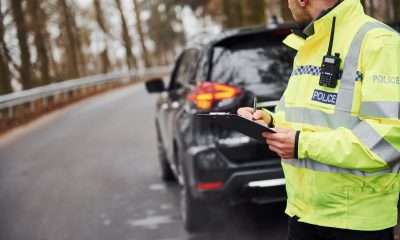
Casualty numbers associated with illness remain high in the UK. | Photo: IAM

Hundreds of UK motorists are receiving driving licence endorsements for driving while medically unfit, with new figures revealing a dramatic 238% increase in just three years.

Data obtained from the Driver and Vehicle Licensing Agency (DVLA) shows endorsements for three medical-related driving offences jumped from 198 in 2022 to 669 in 2025.

Road safety charity IAM RoadSmart has warned that the trend raises serious concerns about motorists continuing to drive despite medical restrictions. The sharp rise has prompted fresh concerns about road safety, particularly as drivers with medical restrictions may put themselves and other road users at risk.

Working-age drivers account for most offences

The figures cover drivers using a vehicle after their licence was revoked or refused on medical grounds, making false declarations about their fitness to drive, and driving with uncorrected defective eyesight.

Driving after medical licence revocation or refusal accounted for 646 of the 669 endorsements recorded in 2025.

Surprisingly, older motorists were not responsible for most cases. Working-age adults accounted for 84% of offences involving medical licence revocation or refusal, compared with just 10% among drivers aged 65 and over.

IAM RoadSmart believes greater use of automatic number plate recognition (ANPR) technology could help explain the rise in detected offences. However, this has not been established as the cause.

“While the numbers are relatively low, they still equate to two people every day and the trend is heading in the wrong direction. Greater use of ANPR enforcement is likely to be the most plausible cause behind the increase, but it still paints a worrying picture of individuals that are unwilling to stop driving, despite being told not to.

The safety implications are significant. In 2025, there were 1,192 fatal or serious road casualties in collisions where illness, disability or defective eyesight was recorded as a contributing factor,” said IAM RoadSmart Director of Policy and External Communications, Nicholas Lyes.

DVLA medical rules: Drivers risk £1,000 fine

Under current DVLA rules, motorists must report medical conditions that could affect their ability to drive safely.

These include certain heart conditions, epilepsy, diabetes, sleep apnoea and eyesight problems. Drivers must also notify the DVLA if an existing condition worsens.

Failing to disclose a relevant medical condition can result in a fine of up to £1,000. Motorists could also face prosecution if they are involved in an accident.

Drivers must surrender their licence if a doctor advises them to stop driving for at least three months or they no longer meet medical driving standards.

Meanwhile, DVLA processing times have improved considerably. Average medical assessment waiting times fell from 96 working days in 2022 to 45 days in 2025.

In 2024, the agency made more than 900,000 medical licensing decisions, with just over 59,000 drivers losing their entitlement to drive.

Continue Reading

Trending