Lifestyle
How the June heatwave is affecting public transport in London

Published
5 months agoon

London’s ongoing heatwave in late June 2026 has triggered severe disruption across the city’s transport system, with rail operators, Transport for London and airport services all issuing urgent warnings as temperatures climb towards the high 30s. The Met Office has placed red and amber alerts across much of England, with London seeing highs of up to 36°C and rail temperatures exceeding 50°C on exposed sections of track.
For those who still need to leave the house and face the stifling heat, extra planning has become unavoidable. What would normally be a straightforward commute now requires checking live updates, adjusting departure times and preparing for long waits on platforms that feel hotter than the streets above. This week’s heatwave has triggered cancellations, reduced timetables and widespread delays across multiple operators, piling yet more pressure onto the already strained daily routines of London commuters. The combination of slower trains, overcrowded stations and unpredictable service changes has turned even short journeys into endurance tests, forcing thousands to rethink how—and when—they travel through the capital.
Rail Services Buckling Under Pressure
London Northwestern Railway (LNR) has extended its “essential travel only” warning through Friday 26 June, operating a reduced timetable across key routes including Birmingham New Street–London Euston, Birmingham New Street–Liverpool Lime Street and Tring–London Euston. The operator confirmed that rails expanding in the heat require trains to run at slower speeds, reducing capacity.
“With the ongoing heatwave continuing to cause significant disruption to rail services, we are again asking our customers to only travel on Friday if their journey is essential,” says Jonny Wiseman, LNR customer experience and commercial director. “Customers holding tickets for travel can use them on any day up until next Tuesday, or return them to their place of purchase for a full refund.”
LNR is far from alone. National Rail has issued repeated alerts urging passengers to avoid travel unless absolutely necessary, with major disruption reported between London St Pancras International and Bedford and across the wider Thameslink, Southern and Great Northern networks. Speed restrictions have been imposed to prevent buckled rails and sagging overhead wires, causing delays of up to 20 minutes on some routes.
Tube, Overground and Elizabeth Line Disruptions
Transport for London has warned of widespread disruption across the network as temperatures inside deep‑level Tube lines soar. The Central line recorded a sweltering 39.4°C on Wednesday, prompting users to notice how unprepared the underground system is for extremely high temperatures.
“The Central line underground tube carriage is melting. The sweltering London underground heat is testing the limits of the tube map adhesive,” said YouTuber Tee Tong, captioning his video of a Tube carriage where adverts can be seen peeling away from the panels above passengers’ heads.
The Central line underground tube carriage is melting. The sweltering London underground heat is testing the limits of the tube map adhesive. pic.twitter.com/MpTzQI2vnD
— Tee Tong (@sutats) June 25, 2026
The Elizabeth line is also operating a reduced service, with cancellations on the Shenfield–Liverpool Street section during peak hours and major disruption affecting Heathrow services.
Planned engineering works this weekend (27–28 June) will add further strain, with closures on the Piccadilly line between King’s Cross St Pancras and Northfields/Uxbridge, District line suspensions between Turnham Green and Ealing Broadway, and DLR closures between Prince Regent and Beckton. Several Overground routes will also be shut or reduced.
Wider Impact Across London
The heatwave’s effects extend beyond transport. More than 300 schools across England and Wales have closed or partially shut due to extreme temperatures, while the Changing of the Guard at Buckingham Palace and Windsor Castle has been cancelled for three consecutive days to protect personnel and animals. Roads have softened in places, and emergency services have issued health warnings as temperatures continue to rise.
Air travel remains structurally safe, but Heathrow Airport has warned of delays, longer queues and operational challenges during peak afternoon heat.
Olivia Miller is a journalist and blogger regularly collaborating with media outlets and writing about entrepreneurship, brand authority and corporate social responsibility (CSR).

You may like


Nearly half of Europe’s longest shopping street becomes traffic-free


Beauty Bulb Live debuts first in-person edition in London


Police imposes strict conditions on Palestine march in London this Saturday

Number of UK drivers caught ignoring medical licence restrictions soars


How cities can build more efficient and sustainable waste systems

Oxford Street prepares to go traffic-free this month
Lifestyle
Nearly half of Europe’s longest shopping street becomes traffic-free
Published
2 weeks agoon
October 26, 2026
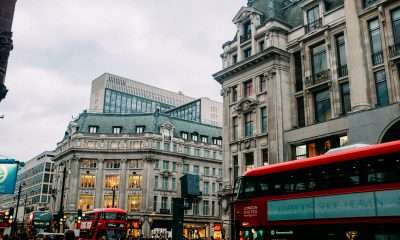
Nearly 1km of London’s Oxford Street, widely regarded as Europe’s longest continuous shopping street, became traffic-free on Monday, 26 October 2026.
The pedestrianisation scheme, introduced by Mayor of London Sadiq Khan, prevents cars, buses, taxis and bicycles from using the stretch between Orchard Street, near Selfridges, and Great Portland Street, east of Oxford Circus.
Stretching approximately 1.9km through central London, Oxford Street is one of Europe’s most recognisable shopping destinations. The new restrictions mean that almost half of the famous retail thoroughfare is now traffic-free.
The changes form part of a wider regeneration project designed to make Oxford Street safer, improve the shopping experience and attract more visitors to central London.
However, the new restrictions also mean significant changes for bus passengers, cyclists, motorists and people travelling to the area.
Which parts of Oxford Street are closed and what are the new restrictions?
The traffic-free section covers approximately 900 metres of Oxford Street, including the busy Oxford Circus shopping area.
According to Transport for London (TfL), cars, buses, taxis, private hire vehicles, bicycles, e-scooters and pedicabs are no longer permitted along the affected stretch.
Emergency vehicles and mobility scooters retain access, while authorised delivery and servicing vehicles can enter between midnight and 7am.
Several roads crossing Oxford Street remain open to north-south traffic, including Regent Street, Duke Street and Davies Street.
The changes have also affected public transport. Bus routes 7, 94, N7, N113 and N137 now terminate at Marble Arch, while routes 98, 139, 390, N98 and N207 have been diverted through surrounding streets.
Some replacement bus stops are approximately 200 metres from the pedestrianised area.
Despite these changes, shoppers can continue accessing Oxford Street using the London Underground and Elizabeth line.
Nearby stations include Oxford Circus, Bond Street, Marble Arch and Tottenham Court Road. TfL advises passengers to allow extra time and check their journeys before travelling.
Why is Oxford Street being pedestrianised and what happens next?
The closure marks the first stage of a long-awaited plan to transform one of Britain’s most recognisable shopping destinations.
Oxford Street attracts approximately 500,000 visitors daily, according to estimates cited by the Mayor’s office. However, the area has faced growing competition from online shopping and changing consumer habits.
The departure of major retailers, including Topshop and House of Fraser, has also highlighted the challenges facing the famous shopping district.
Sadiq Khan hopes the pedestrianisation will encourage investment, support businesses and create a more attractive environment for shoppers and tourists.
The project has faced opposition from some local residents, who have raised concerns about increased congestion on surrounding roads.
Further improvements are planned for 2027, including new seating, trees, public spaces and improved signage.
Lifestyle
Police imposes strict conditions on Palestine march in London this Saturday
Published
1 month agoon
October 9, 2026
The Metropolitan Police has announced strict conditions for a major pro-Palestine demonstration in central London on Saturday, 10 October 2026, with up to 10,000 people expected to attend.
The Palestine Coalition march will begin gathering on the Embankment at midday before travelling through Westminster and ending with a rally in Whitehall.
Police have imposed restrictions on the route, gathering areas and finishing times under the Public Order Act. A significant police presence is also planned, with officers aiming to prevent disruption while protecting the right to peaceful protest.
Palestine march route and restrictions confirmed
Protesters must follow a designated route starting at Victoria Embankment before crossing Westminster Bridge. The procession will then continue along York Road, Waterloo Bridge and the Strand before reaching Whitehall.
Participants must remain within specified gathering areas before the march begins. They are also prohibited from entering an emergency access lane on Westminster Bridge and Westminster Bridge Road.
Once protesters reach Whitehall, speeches and music must finish by 5.30pm. The entire rally must conclude by 6.30pm.
Police have also authorised additional powers under Section 60AA of the Criminal Justice and Public Order Act 1994.
These allow officers to require someone to remove a face covering if they reasonably believe it is being worn primarily to conceal their identity.
A separate counter-protest organised by Stop The Hate is also expected.
Police warn of disruption and possible arrests
Deputy Assistant Commissioner Carl Galvin, who is leading the operation, said the demonstration could have a greater impact on communities because it falls close to the third anniversary of the 7 October 2023 Hamas attacks on Israel.
“Ahead of the protest we have been in constructive discussion with the Palestine Coalition, as well as partners, residents, businesses, faith and community groups. We know Saturday’s event, so close to the third anniversary of the terror attack on Israel, has the potential to have a greater impact on communities than the previous national matches,” says Galvin.
Saturday’s demonstration is expected to attract between 7,000 and 10,000 participants across the planned events.
Anyone travelling through central London should anticipate disruption around Westminster Bridge, Waterloo Bridge, the Strand and Whitehall.
Lifestyle
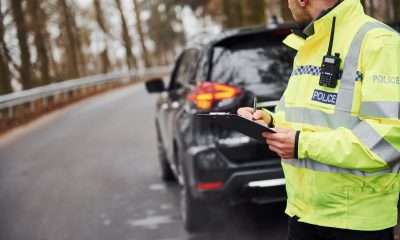
Number of UK drivers caught ignoring medical licence restrictions soars
Published
1 month agoon
October 8, 2026
Hundreds of UK motorists are receiving driving licence endorsements for driving while medically unfit, with new figures revealing a dramatic 238% increase in just three years.
Data obtained from the Driver and Vehicle Licensing Agency (DVLA) shows endorsements for three medical-related driving offences jumped from 198 in 2022 to 669 in 2025.
Road safety charity IAM RoadSmart has warned that the trend raises serious concerns about motorists continuing to drive despite medical restrictions. The sharp rise has prompted fresh concerns about road safety, particularly as drivers with medical restrictions may put themselves and other road users at risk.
Working-age drivers account for most offences
The figures cover drivers using a vehicle after their licence was revoked or refused on medical grounds, making false declarations about their fitness to drive, and driving with uncorrected defective eyesight.
Driving after medical licence revocation or refusal accounted for 646 of the 669 endorsements recorded in 2025.
Surprisingly, older motorists were not responsible for most cases. Working-age adults accounted for 84% of offences involving medical licence revocation or refusal, compared with just 10% among drivers aged 65 and over.
IAM RoadSmart believes greater use of automatic number plate recognition (ANPR) technology could help explain the rise in detected offences. However, this has not been established as the cause.
“While the numbers are relatively low, they still equate to two people every day and the trend is heading in the wrong direction. Greater use of ANPR enforcement is likely to be the most plausible cause behind the increase, but it still paints a worrying picture of individuals that are unwilling to stop driving, despite being told not to.
The safety implications are significant. In 2025, there were 1,192 fatal or serious road casualties in collisions where illness, disability or defective eyesight was recorded as a contributing factor,” said IAM RoadSmart Director of Policy and External Communications, Nicholas Lyes.
DVLA medical rules: Drivers risk £1,000 fine
Under current DVLA rules, motorists must report medical conditions that could affect their ability to drive safely.
These include certain heart conditions, epilepsy, diabetes, sleep apnoea and eyesight problems. Drivers must also notify the DVLA if an existing condition worsens.
Failing to disclose a relevant medical condition can result in a fine of up to £1,000. Motorists could also face prosecution if they are involved in an accident.
Drivers must surrender their licence if a doctor advises them to stop driving for at least three months or they no longer meet medical driving standards.
Meanwhile, DVLA processing times have improved considerably. Average medical assessment waiting times fell from 96 working days in 2022 to 45 days in 2025.
In 2024, the agency made more than 900,000 medical licensing decisions, with just over 59,000 drivers losing their entitlement to drive.


Trending

 Business4 weeks ago
How safety training reduces costs and boosts productivity

 World4 weeks ago
Pope Leo XIV diagnosed with lung cancer after successful surgery

 Tech3 weeks ago
Yahoo Mail down in the UK as users report temporary error 15

 Business4 weeks ago
How to improve business resilience and prevent costly operational failures

 Business4 weeks ago
Why Clear Communication Is Essential for Successful International Deals

 World4 weeks ago
Sally Rooney’s books withdrawn from UK retailers over Palestine Action support
- Business3 weeks ago
Beauty Bulb Live debuts first in-person edition in London

 World3 weeks ago
France protests turn violent as Paris faces curfews and transport closures