Connect with us

Lifestyle

Can Emilia Pérez Shake Off the Backlash and Win Big at the 2025 Oscars?

Published

on

Can Emilia Pérez Shake Off the Backlash and Win Big at the 2025 Oscars?
Cast of Emília Pérez attends the 15th Governors Awards before the scandal Photo: Mark Von Holden / The Academy

Back in May 2024, I attended the Cannes Film Festival premiere of Jacques Audiard’s Emilia Pérez. After 132 minutes squeezed into a tuxedo and uncomfortable shoes, watching a musical about a Mexican lawyer who is offered an unusual job to help a notorious cartel boss retire and transition into living as a woman, I was relieved when it was over.

However, I seemed to be in the only one.

The majority of the over 2,000 attendees at the Lumière Theatre appeared to enjoy it, rewarding Emilia Pérez with a nine-minute standing ovation. After Audiard addressed the audience in French, the ovation resumed for another very long minute plus. Looking around and observing the enthusiastic live response, I could see that the buzz was real. So, rather confused, I left afterwards not sure about my own lack of enthusiasm, especially as others lauded the film’s groundbreaking nature.

Perhaps exhaustion played a role.

Emilia Pérez premiered on Saturday, May 18th, the fifth day of the 77th Cannes Film Festival. For journalists, the days grow increasingly demanding, with standard 16-hour shifts starting at 8:30 AM for press screenings and some premieres kicking off around midnight. Over the two-week festival, with over 100 films to cover, five hours of sleep per night is considered a luxury.

-‘Exhaustion, that is it’ – I’ve told myself, making a mental note in bold letters to re-watch Emilia Pérez as soon as I had a chance, in a more relaxed setting, of course.

The following week, Emilia Pérez emerged from Cannes with both the Jury Prize and a shared Best Actress award for its cast, along with a reported $12 million acquisition by Netflix. This reinforced my suspicion that the film was a masterpiece. Certainly I was the one in the wrong for daring to think that it was anything short of incredible, right?.

Journalist Marcio Delgado at the Cannes Film Festival 2024
Long days: For journalists, coverage in Cannes means standard 16-hour shifts starting at 8:30 AM for press screenings | Photo: Erika Abreu

Several months and a few delays later, due to a wildfire in California, on January 23 the Academy announced the 2025 Oscar nominees. By then, I had forgotten my pledge to revisit Emilia Pérez, after Cannes. However, seeing the film nominated in 13 categories, including a historic first-time nomination for a transgender actress, Karla Sofía Gascón, reignited my interest in understanding the film’s widespread acclaim. What was hypnotising everyone, from film industry insiders to seasoned film critics and journalists, that I genuinely couldn’t see in Emilia Pérez?

Unbeknownst to me, within a week, perceptions of Jacques Audiard’s sixth film would shift.

It all started, it seems, when on January 29, 2025, the Brazilian newspaper Folha de S. Paulo published a YouTube interview featuring 52-year-old Karla Sofía Gascón, Emilia Pérez’ leading star, accusing the social media team of fellow Best Actress nominee Fernanda Torres of attempting to undermine her work. The edited soundbite was unflattering:

“I have never, at any point, said anything bad about Fernanda Torres or her movie. However, there are people working with Fernanda Torres tearing me and Emilia Pérez down. That speaks more about their movie than mine,” Gascón remarked, igniting controversy. By this point, Brazilian fans were heavily invested in I’m Still Here, as both films competed for Best Picture and Best International Feature Film.

Gascón had little time to retract claims made during the unfortunate interview, given in her native Spanish. She issued a statement clarifying that her comments were not directed at Torres or her team but rather at the broader internet community.

However, a bigger controversy erupted just a few days after the interview with the Brazilian media outlet, imploding Karla Sofia’s career. The Spanish actress made headlines again, this time under fire over resurfaced tweets about Muslims, George Floyd, and Oscars diversity. The posts, some as recent as 2023, were discovered by freelance culture writer Sarah Hagi, a Canada-based journalist and co-host of the podcast “Scamfluencers.” This led to Netflix distancing itself from the actress; she subsequently deleted her Twitter/X account and began skipping film awards ceremonies.

If pre-scandal, I had committed myself to giving Emilia Pérez another go; now, more than ever, I felt compelled to re-watch it to understand the film’s context. So, as soon as it landed on Amazon Prime Video, I rushed to re-watch it—no tuxedo, no 16-hour shifts, no exhaustion.

And here is the thing: Despite all the hype surrounding the film, my second viewing reinforced my initial impression – and this time I hated it even more.

I realised that I am not a big fan of long singing sequences about vaginoplasty, I came to terms that I still couldn’t quite understand what Selena Gomez was saying or singing lots of time. And, at least this time, it wasn’t my fault and I didn’t have any external factors to blame. It a nutshell, after watching it again, I concluded that Emilia Pérez is not a good film by any metrics. The film may have just won big at the César, the main cinema awards in France, securing seven trophies including best film and best director. But at this point, I don’t think Karla Sofia Gascón can be considered a frontrunner to win her own Oscar in 2025.

The 97th Oscars will be held on Sunday, 2nd March 2025, at the Dolby® Theatre at Ovation Hollywood. The ceremony will be televised live on ABC, streamed live on Hulu, and aired in more than 200 territories worldwide.

Marcio Delgado is a Journalist, Producer and Influencer Marketing Manager working with brands and publications in Europe, America and Asia.

Lifestyle

Nearly half of Europe’s longest shopping street becomes traffic-free

Published

on

Nearly half of Europe's longest shopping street becomes traffic-free in London
Several roads crossing Oxford Street remain open to north-south traffic. | Photo: Mostly London

Nearly 1km of London’s Oxford Street, widely regarded as Europe’s longest continuous shopping street, became traffic-free on Monday, 26 October 2026.

The pedestrianisation scheme, introduced by Mayor of London Sadiq Khan, prevents cars, buses, taxis and bicycles from using the stretch between Orchard Street, near Selfridges, and Great Portland Street, east of Oxford Circus.

Stretching approximately 1.9km through central London, Oxford Street is one of Europe’s most recognisable shopping destinations. The new restrictions mean that almost half of the famous retail thoroughfare is now traffic-free.

The changes form part of a wider regeneration project designed to make Oxford Street safer, improve the shopping experience and attract more visitors to central London.

However, the new restrictions also mean significant changes for bus passengers, cyclists, motorists and people travelling to the area.

Which parts of Oxford Street are closed and what are the new restrictions?

The traffic-free section covers approximately 900 metres of Oxford Street, including the busy Oxford Circus shopping area.

According to Transport for London (TfL), cars, buses, taxis, private hire vehicles, bicycles, e-scooters and pedicabs are no longer permitted along the affected stretch.

Emergency vehicles and mobility scooters retain access, while authorised delivery and servicing vehicles can enter between midnight and 7am.

Several roads crossing Oxford Street remain open to north-south traffic, including Regent Street, Duke Street and Davies Street.

The changes have also affected public transport. Bus routes 7, 94, N7, N113 and N137 now terminate at Marble Arch, while routes 98, 139, 390, N98 and N207 have been diverted through surrounding streets.

Some replacement bus stops are approximately 200 metres from the pedestrianised area.

Despite these changes, shoppers can continue accessing Oxford Street using the London Underground and Elizabeth line.

Nearby stations include Oxford Circus, Bond Street, Marble Arch and Tottenham Court Road. TfL advises passengers to allow extra time and check their journeys before travelling.

Why is Oxford Street being pedestrianised and what happens next?

The closure marks the first stage of a long-awaited plan to transform one of Britain’s most recognisable shopping destinations.

Oxford Street attracts approximately 500,000 visitors daily, according to estimates cited by the Mayor’s office. However, the area has faced growing competition from online shopping and changing consumer habits.

The departure of major retailers, including Topshop and House of Fraser, has also highlighted the challenges facing the famous shopping district.

Sadiq Khan hopes the pedestrianisation will encourage investment, support businesses and create a more attractive environment for shoppers and tourists.

The project has faced opposition from some local residents, who have raised concerns about increased congestion on surrounding roads.

Further improvements are planned for 2027, including new seating, trees, public spaces and improved signage.

Continue Reading

Lifestyle

Police imposes strict conditions on Palestine march in London this Saturday

Published

on

Police imposes strict conditions on Palestine march in London this Saturday
A counter-protest by Stop The Hate is also expected to take place this weekend. | Photo: Guy Joben

The Metropolitan Police has announced strict conditions for a major pro-Palestine demonstration in central London on Saturday, 10 October 2026, with up to 10,000 people expected to attend.

The Palestine Coalition march will begin gathering on the Embankment at midday before travelling through Westminster and ending with a rally in Whitehall.

Police have imposed restrictions on the route, gathering areas and finishing times under the Public Order Act. A significant police presence is also planned, with officers aiming to prevent disruption while protecting the right to peaceful protest.

Palestine march route and restrictions confirmed

Protesters must follow a designated route starting at Victoria Embankment before crossing Westminster Bridge. The procession will then continue along York Road, Waterloo Bridge and the Strand before reaching Whitehall.

Participants must remain within specified gathering areas before the march begins. They are also prohibited from entering an emergency access lane on Westminster Bridge and Westminster Bridge Road.

Once protesters reach Whitehall, speeches and music must finish by 5.30pm. The entire rally must conclude by 6.30pm.

Police have also authorised additional powers under Section 60AA of the Criminal Justice and Public Order Act 1994.

These allow officers to require someone to remove a face covering if they reasonably believe it is being worn primarily to conceal their identity.

A separate counter-protest organised by Stop The Hate is also expected.

Police warn of disruption and possible arrests

Deputy Assistant Commissioner Carl Galvin, who is leading the operation, said the demonstration could have a greater impact on communities because it falls close to the third anniversary of the 7 October 2023 Hamas attacks on Israel.

“Ahead of the protest we have been in constructive discussion with the Palestine Coalition, as well as partners, residents, businesses, faith and community groups. We know Saturday’s event, so close to the third anniversary of the terror attack on Israel, has the potential to have a greater impact on communities than the previous national matches,” says Galvin.

Saturday’s demonstration is expected to attract between 7,000 and 10,000 participants across the planned events.

Anyone travelling through central London should anticipate disruption around Westminster Bridge, Waterloo Bridge, the Strand and Whitehall.

Continue Reading

Lifestyle

Number of UK drivers caught ignoring medical licence restrictions soars

Published

on

Number of UK drivers caught ignoring medical licence restrictions soars
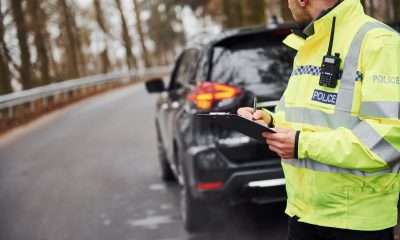
Casualty numbers associated with illness remain high in the UK. | Photo: IAM

Hundreds of UK motorists are receiving driving licence endorsements for driving while medically unfit, with new figures revealing a dramatic 238% increase in just three years.

Data obtained from the Driver and Vehicle Licensing Agency (DVLA) shows endorsements for three medical-related driving offences jumped from 198 in 2022 to 669 in 2025.

Road safety charity IAM RoadSmart has warned that the trend raises serious concerns about motorists continuing to drive despite medical restrictions. The sharp rise has prompted fresh concerns about road safety, particularly as drivers with medical restrictions may put themselves and other road users at risk.

Working-age drivers account for most offences

The figures cover drivers using a vehicle after their licence was revoked or refused on medical grounds, making false declarations about their fitness to drive, and driving with uncorrected defective eyesight.

Driving after medical licence revocation or refusal accounted for 646 of the 669 endorsements recorded in 2025.

Surprisingly, older motorists were not responsible for most cases. Working-age adults accounted for 84% of offences involving medical licence revocation or refusal, compared with just 10% among drivers aged 65 and over.

IAM RoadSmart believes greater use of automatic number plate recognition (ANPR) technology could help explain the rise in detected offences. However, this has not been established as the cause.

“While the numbers are relatively low, they still equate to two people every day and the trend is heading in the wrong direction. Greater use of ANPR enforcement is likely to be the most plausible cause behind the increase, but it still paints a worrying picture of individuals that are unwilling to stop driving, despite being told not to.

The safety implications are significant. In 2025, there were 1,192 fatal or serious road casualties in collisions where illness, disability or defective eyesight was recorded as a contributing factor,” said IAM RoadSmart Director of Policy and External Communications, Nicholas Lyes.

DVLA medical rules: Drivers risk £1,000 fine

Under current DVLA rules, motorists must report medical conditions that could affect their ability to drive safely.

These include certain heart conditions, epilepsy, diabetes, sleep apnoea and eyesight problems. Drivers must also notify the DVLA if an existing condition worsens.

Failing to disclose a relevant medical condition can result in a fine of up to £1,000. Motorists could also face prosecution if they are involved in an accident.

Drivers must surrender their licence if a doctor advises them to stop driving for at least three months or they no longer meet medical driving standards.

Meanwhile, DVLA processing times have improved considerably. Average medical assessment waiting times fell from 96 working days in 2022 to 45 days in 2025.

In 2024, the agency made more than 900,000 medical licensing decisions, with just over 59,000 drivers losing their entitlement to drive.

Continue Reading

Trending