Lifestyle
6 Must-Have Tools for DIY Home Improvement Projects

Published
2 years agoon

If you’re taking on any DIY home improvement projects around your property this year, it’s important that you’re well-equipped for the task or tasks at hand.
These tools will make your tasks easier to manage, without you pulling your hair out because a screw isn’t going in properly, or the screwdriver head is not the right type that you need for what you’re screwing in or assembling.
The secret to a successful DIY job is the tools that you have within your kit. With that being said, there are a number of ways in which you can improve your home DIY efforts with the right tools. Here are six must-have tools for your DIY home improvement projects this year.
1. A tape measure
Not having a tape measure when doing any home DIY project is like not having timers set to what you’re cooking in the kitchen. A tape measure helps to measure everything out so that you’re able to fit the right furniture in the spaces provided or to ensure what you hang on the wall is at the right height or level in relation to other items of furniture in the space.
If you don’t have a tape measure, then how are you supposed to measure? If you’re relying on your feet or hands to measure, then you’re more than likely to find that your measurements are askew slightly or significantly.
2. An electric drill and drill headset
While having an assortment of screwdrivers in your toolkit might seem like the go-to situation for your home tools, you may want to think smarter. An electric drill is going to help ensure you have all of the screwdrivers you need if you pair it alongside a drill headset.
Electric drills require a lot less effort when you’re drilling into a wall or a piece of furniture. At the same time, you have the opportunity to change up the drill head in an instant without needing to rifle through your cluttered toolkit in order to find an individual screwdriver to tackle said task.
The only thing you’ll need to remember is to make sure you’ve charged up the electric drill before you intend to use it. There’s nothing worse than coming to use one and realizing it’s run out of juice.
3. Hammer
There’s nothing quite like whacking out some pent-up aggression or aggravation than hitting a nail with a hammer. Or anything with a hammer for that matter!
Hammers are a core part of your tool kit and can come in handy for a lot of things beyond just hitting screws. You might need to release something that requires a bit of force or pressure and a hammer can be a great help for that.
It’s always important to be aware of your fingers and all other body parts when using a hammer. It’s a hefty weight to swing around and you don’t want to have any bone colliding with it.
4. Sander
When doing surface-level, cosmetic jobs around your home, a sander is a great way of prepping the surfaces before doing anything more to it.
For your walls and even floors, a sander is a useful tool for helping create a smooth and level surface to work from. It’s a much better canvas to work on than something that has bumps or ridges, which can make painting or decorating harder to do.
You’ll also find you get a more flawless finish when you’re sanding your walls, floors, or ceilings before painting and decorating.
5. Saw
There’s efficiency and precision that’s required with a lot of home improvement projects, which is why you want the best tools to help tackle those projects successfully. For the larger tasks, more equipment is required and it’s important to try and invest in quality where you can.
A chain saw, despite it feeling a little daunting to use, is an effective way of chopping stuff down that has outgrown its space. When landscaping your backyard, a chain saw can really come in handy, especially in comparison to hand saws which would require a lot of manual effort on your part.
6. Utility knife
A utility knife is great for day-to-day home maintenance and for use whenever you might need something cutting quickly. Whether it’s something as simple as a cardboard box or a piece of wood, utility knives are good to have in your tool kit and on your person for odd jobs around the home.
With these six must-have tools, you’re sure to find plenty of success with your DIY home improvement projects.
Olivia Miller is a journalist and blogger regularly collaborating with media outlets and writing about entrepreneurship, brand authority and corporate social responsibility (CSR).

You may like


Nearly half of Europe’s longest shopping street becomes traffic-free


Beauty Bulb Live debuts first in-person edition in London


Police imposes strict conditions on Palestine march in London this Saturday
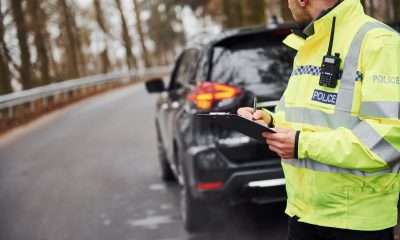

Number of UK drivers caught ignoring medical licence restrictions soars


How cities can build more efficient and sustainable waste systems


How to prepare for university admissions tests without letting stress take over
Lifestyle
Nearly half of Europe’s longest shopping street becomes traffic-free
Published
2 weeks agoon
October 26, 2026
Nearly 1km of London’s Oxford Street, widely regarded as Europe’s longest continuous shopping street, became traffic-free on Monday, 26 October 2026.
The pedestrianisation scheme, introduced by Mayor of London Sadiq Khan, prevents cars, buses, taxis and bicycles from using the stretch between Orchard Street, near Selfridges, and Great Portland Street, east of Oxford Circus.
Stretching approximately 1.9km through central London, Oxford Street is one of Europe’s most recognisable shopping destinations. The new restrictions mean that almost half of the famous retail thoroughfare is now traffic-free.
The changes form part of a wider regeneration project designed to make Oxford Street safer, improve the shopping experience and attract more visitors to central London.
However, the new restrictions also mean significant changes for bus passengers, cyclists, motorists and people travelling to the area.
Which parts of Oxford Street are closed and what are the new restrictions?
The traffic-free section covers approximately 900 metres of Oxford Street, including the busy Oxford Circus shopping area.
According to Transport for London (TfL), cars, buses, taxis, private hire vehicles, bicycles, e-scooters and pedicabs are no longer permitted along the affected stretch.
Emergency vehicles and mobility scooters retain access, while authorised delivery and servicing vehicles can enter between midnight and 7am.
Several roads crossing Oxford Street remain open to north-south traffic, including Regent Street, Duke Street and Davies Street.
The changes have also affected public transport. Bus routes 7, 94, N7, N113 and N137 now terminate at Marble Arch, while routes 98, 139, 390, N98 and N207 have been diverted through surrounding streets.
Some replacement bus stops are approximately 200 metres from the pedestrianised area.
Despite these changes, shoppers can continue accessing Oxford Street using the London Underground and Elizabeth line.
Nearby stations include Oxford Circus, Bond Street, Marble Arch and Tottenham Court Road. TfL advises passengers to allow extra time and check their journeys before travelling.
Why is Oxford Street being pedestrianised and what happens next?
The closure marks the first stage of a long-awaited plan to transform one of Britain’s most recognisable shopping destinations.
Oxford Street attracts approximately 500,000 visitors daily, according to estimates cited by the Mayor’s office. However, the area has faced growing competition from online shopping and changing consumer habits.
The departure of major retailers, including Topshop and House of Fraser, has also highlighted the challenges facing the famous shopping district.
Sadiq Khan hopes the pedestrianisation will encourage investment, support businesses and create a more attractive environment for shoppers and tourists.
The project has faced opposition from some local residents, who have raised concerns about increased congestion on surrounding roads.
Further improvements are planned for 2027, including new seating, trees, public spaces and improved signage.
Lifestyle
Police imposes strict conditions on Palestine march in London this Saturday
Published
4 weeks agoon
October 9, 2026
The Metropolitan Police has announced strict conditions for a major pro-Palestine demonstration in central London on Saturday, 10 October 2026, with up to 10,000 people expected to attend.
The Palestine Coalition march will begin gathering on the Embankment at midday before travelling through Westminster and ending with a rally in Whitehall.
Police have imposed restrictions on the route, gathering areas and finishing times under the Public Order Act. A significant police presence is also planned, with officers aiming to prevent disruption while protecting the right to peaceful protest.
Palestine march route and restrictions confirmed
Protesters must follow a designated route starting at Victoria Embankment before crossing Westminster Bridge. The procession will then continue along York Road, Waterloo Bridge and the Strand before reaching Whitehall.
Participants must remain within specified gathering areas before the march begins. They are also prohibited from entering an emergency access lane on Westminster Bridge and Westminster Bridge Road.
Once protesters reach Whitehall, speeches and music must finish by 5.30pm. The entire rally must conclude by 6.30pm.
Police have also authorised additional powers under Section 60AA of the Criminal Justice and Public Order Act 1994.
These allow officers to require someone to remove a face covering if they reasonably believe it is being worn primarily to conceal their identity.
A separate counter-protest organised by Stop The Hate is also expected.
Police warn of disruption and possible arrests
Deputy Assistant Commissioner Carl Galvin, who is leading the operation, said the demonstration could have a greater impact on communities because it falls close to the third anniversary of the 7 October 2023 Hamas attacks on Israel.
“Ahead of the protest we have been in constructive discussion with the Palestine Coalition, as well as partners, residents, businesses, faith and community groups. We know Saturday’s event, so close to the third anniversary of the terror attack on Israel, has the potential to have a greater impact on communities than the previous national matches,” says Galvin.
Saturday’s demonstration is expected to attract between 7,000 and 10,000 participants across the planned events.
Anyone travelling through central London should anticipate disruption around Westminster Bridge, Waterloo Bridge, the Strand and Whitehall.
Lifestyle
Number of UK drivers caught ignoring medical licence restrictions soars
Published
4 weeks agoon
October 8, 2026
Hundreds of UK motorists are receiving driving licence endorsements for driving while medically unfit, with new figures revealing a dramatic 238% increase in just three years.
Data obtained from the Driver and Vehicle Licensing Agency (DVLA) shows endorsements for three medical-related driving offences jumped from 198 in 2022 to 669 in 2025.
Road safety charity IAM RoadSmart has warned that the trend raises serious concerns about motorists continuing to drive despite medical restrictions. The sharp rise has prompted fresh concerns about road safety, particularly as drivers with medical restrictions may put themselves and other road users at risk.
Working-age drivers account for most offences
The figures cover drivers using a vehicle after their licence was revoked or refused on medical grounds, making false declarations about their fitness to drive, and driving with uncorrected defective eyesight.
Driving after medical licence revocation or refusal accounted for 646 of the 669 endorsements recorded in 2025.
Surprisingly, older motorists were not responsible for most cases. Working-age adults accounted for 84% of offences involving medical licence revocation or refusal, compared with just 10% among drivers aged 65 and over.
IAM RoadSmart believes greater use of automatic number plate recognition (ANPR) technology could help explain the rise in detected offences. However, this has not been established as the cause.
“While the numbers are relatively low, they still equate to two people every day and the trend is heading in the wrong direction. Greater use of ANPR enforcement is likely to be the most plausible cause behind the increase, but it still paints a worrying picture of individuals that are unwilling to stop driving, despite being told not to.
The safety implications are significant. In 2025, there were 1,192 fatal or serious road casualties in collisions where illness, disability or defective eyesight was recorded as a contributing factor,” said IAM RoadSmart Director of Policy and External Communications, Nicholas Lyes.
DVLA medical rules: Drivers risk £1,000 fine
Under current DVLA rules, motorists must report medical conditions that could affect their ability to drive safely.
These include certain heart conditions, epilepsy, diabetes, sleep apnoea and eyesight problems. Drivers must also notify the DVLA if an existing condition worsens.
Failing to disclose a relevant medical condition can result in a fine of up to £1,000. Motorists could also face prosecution if they are involved in an accident.
Drivers must surrender their licence if a doctor advises them to stop driving for at least three months or they no longer meet medical driving standards.
Meanwhile, DVLA processing times have improved considerably. Average medical assessment waiting times fell from 96 working days in 2022 to 45 days in 2025.
In 2024, the agency made more than 900,000 medical licensing decisions, with just over 59,000 drivers losing their entitlement to drive.


Trending

 Business4 weeks ago
How smart content creation drives business growth

 Business4 weeks ago
How clean premises can improve customer experience and loyalty

 Marketing4 weeks ago
The secrets to designing a pitch deck that gets investors interested

 Business4 weeks ago
How to prepare your business for unexpected disruptions
- Lifestyle4 weeks ago
Police imposes strict conditions on Palestine march in London this Saturday
- Lifestyle4 weeks ago
How cities can build more efficient and sustainable waste systems
- Lifestyle4 weeks ago
Number of UK drivers caught ignoring medical licence restrictions soars

 Sustainability4 weeks ago
What is the best way to manage rural property sustainably?
